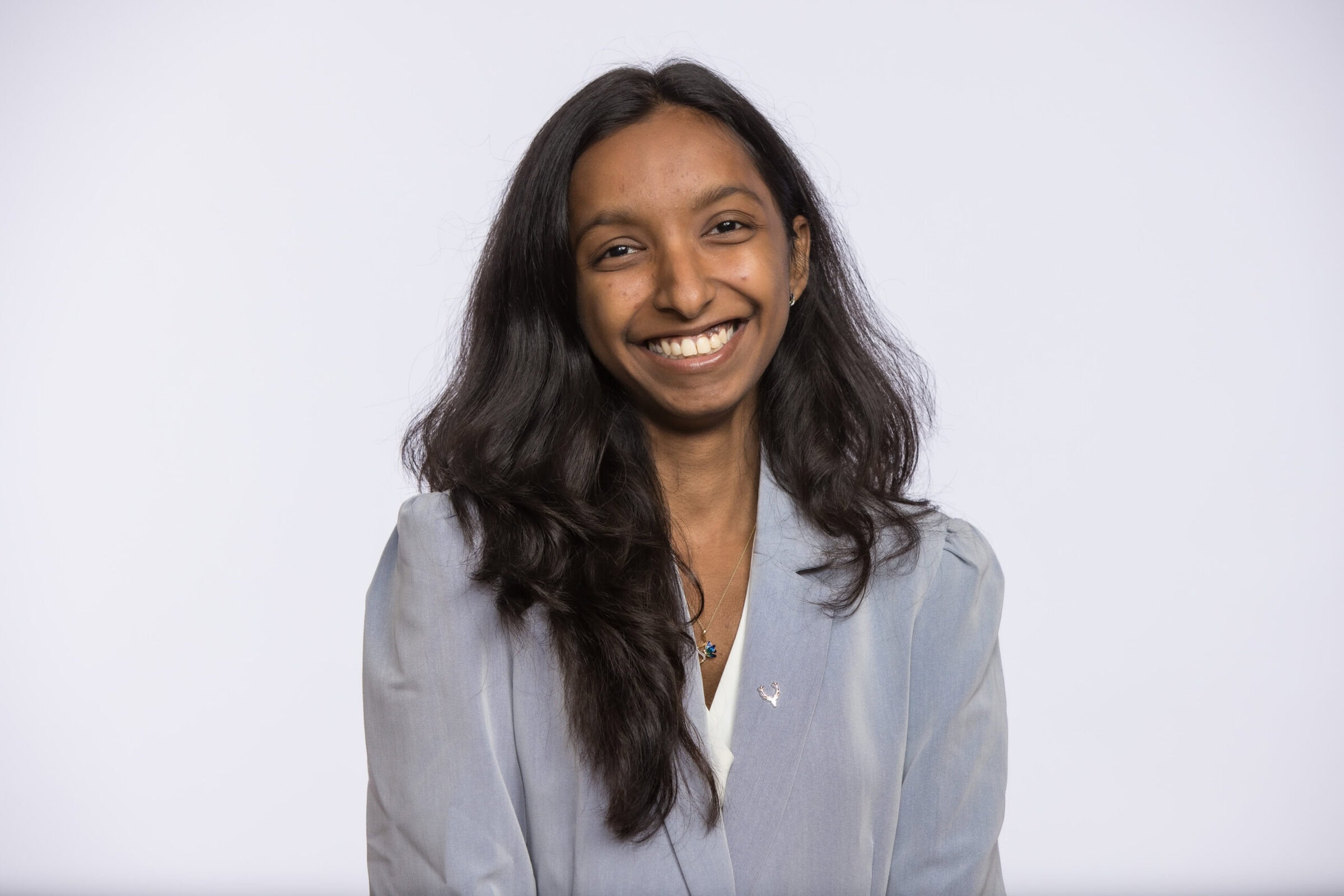
Morehead-Cain Global Fellow Disha Parasu ’26
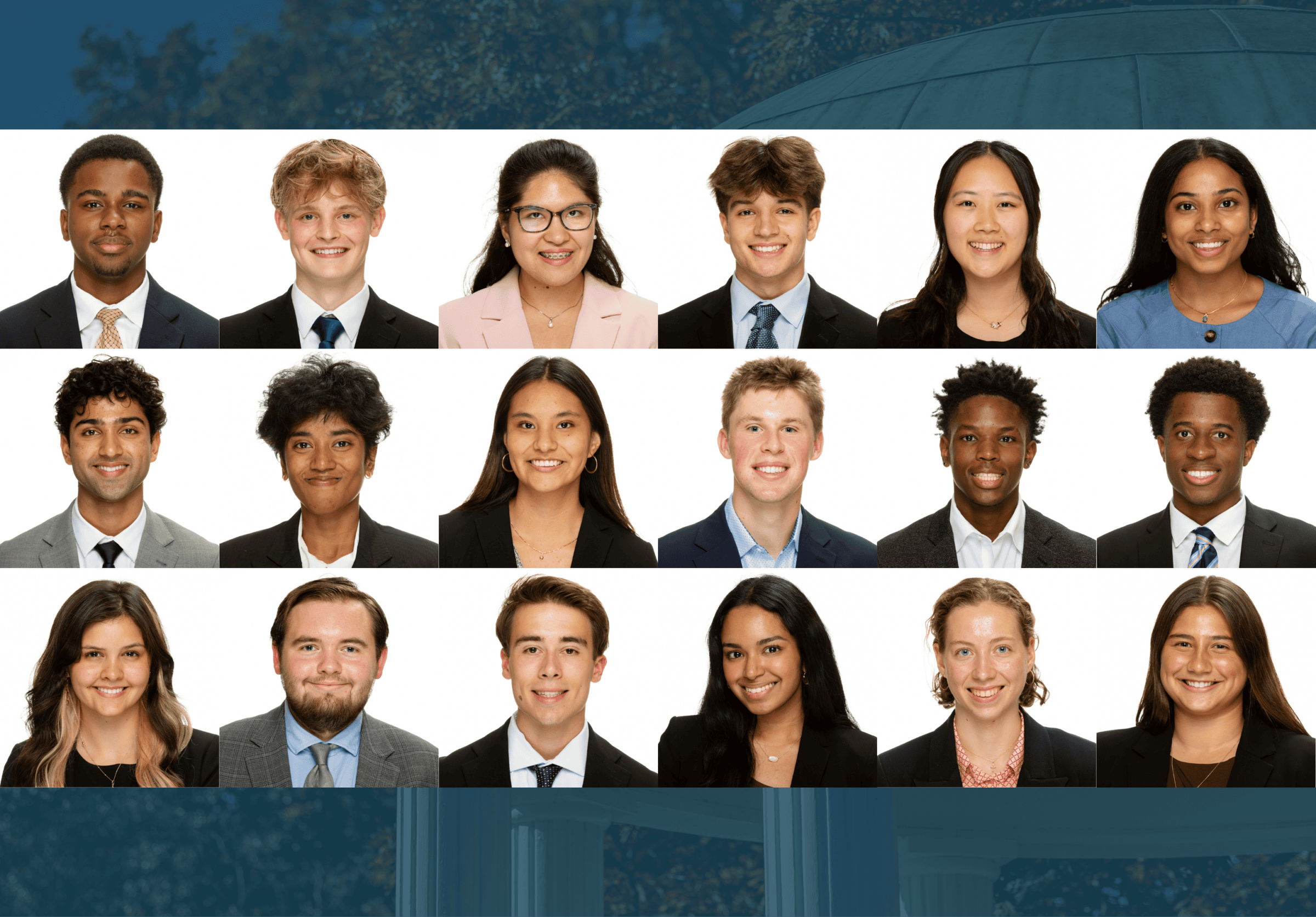
This spring, the inaugural class of Morehead-Cain Global Fellows will conclude their year at the University of North Carolina at Chapel Hill. This miniseries of the Catalyze podcast highlights members of the first class, featuring global fellows from Nigeria, Turkey, and India.
In this episode, Aadya Gattu ’28 of the Scholar Media Team speaks with Morehead-Cain Global Fellow Disha Parasu ’26 about her journey to Carolina, her experiences in the program, and how the year will inform her future impact.
About the guest
Disha is a computer science student at the Vellore Institute of Technology – Chennai specializing in AI and machine learning. She is a core member of Quantumplators, where she explores quantum algorithms and cryptography applications. A Womanium Scholar and participant in the Massachusetts Institute of Technology’s Interdisciplinary Quantum Hackathon, Parasu is passionate about integrating quantum computing with AI to enhance cybersecurity. She is also the founder of Collective Qubits, a student-led startup dedicated to raising awareness of quantum computing around the world. Inspired by UNC–Chapel Hill’s ethos of giving back and lifting others forward, she makes Collective Qubits events free for Carolina students, ensuring that access to quantum education remains open and inclusive. She also helped launch a neighborhood library to bridge generational gaps through the sharing of books and aims to drive innovation in quantum research and digital safety.
About the Morehead-Cain Global Fellows program
The Morehead-Cain Global Fellows program identifies, invests in, and empowers emerging leaders who seek to positively shape communities across the world. Global fellows pursue a fully funded year of undergraduate study and research at the University of North Carolina at Chapel Hill.
During their time at Carolina, global fellows engage in rigorous academics, immersive research, and meaningful cross-cultural exchange. The program includes funded travel within the United States, personal coaching from Morehead-Cain advisers, and yearlong leadership development designed to strengthen purpose, confidence, and impact. Global fellows return home with world-class research experience, an international network, and the skills to lead with clarity and purpose.
Are you ready to step forward and shape the world for the better? Learn more at global.moreheadcain.org.
Music credits
The episode’s intro song is by scholar Scott Hallyburton ’22, guitarist of the band South of the Soul.
How to listen
On your mobile device, you can listen and subscribe to Catalyze on Apple Podcasts or Spotify. For any other podcast app, you can find the show using our RSS feed. You can let us know what you thought of the episode by finding us on social media @moreheadcain or you can email us at communications@moreheadcain.org.
Episode transcription
(Aadya)
Welcome to Catalyze. I’m your host, Aadya Gattu from the class of 2028. This spring, the inaugural class of Morehead-Cain Global Fellows will conclude their year at the University of North Carolina at Chapel Hill. The Global Fellows program identifies, invests in, and empowers emerging leaders who seek to positively shape communities around the world. This miniseries of the Catalyze podcast highlights members of the first class, featuring global fellows from Nigeria, Turkey, and India. In this episode, I speak with Disha Parasu from the class of 2026 about her journey to Carolina, her experiences in the program, and how the year will inform her future impact.
Disha, welcome to the podcast.
(Disha)
Glad to be here.
(Aadya)
I’d love to start by just asking about your classes. What’s been your favorite one this year from either semester?
(Disha)
I think I’ve had two of my classes, both of them are entrepreneurship classes. My Introduction to Entrepreneurship last semester, and this semester it’s Innovation for Entrepreneurship. And I think both the classes have helped me a lot, since I have a startup of my own, so these two classes are helping me grow my startup more and helping me learn the actual foundations. Since there are a lot of decisions that I have to make and I have no clue how to go about them, that’s why I love these classes.
(Aadya)
That’s awesome. I’m super excited to dig into your startups a bit later, but I’d also like to start off with what’s something about Carolina that surprised you when you first arrived?
(Disha)
I feel the inclusivity—it’s just so diverse, but they all welcome you with open arms. I went to, I remember, last week I went to Rotdalmwa’s performance, the African night, and I’m not even African, but they welcomed me so openly and I started dancing with some of them. And I think that was the best part; they just take you in no matter where you’re from.
(Aadya)
I’ve definitely felt that, too. There’s something special at this school. But you’re a computer science student at the Vellore Institute of Technology – Chennai, specializing in artificial intelligence and machine learning. And you’re also a core member of Quantumplators, where you explore quantum algorithms and cryptography. Those are two enormous fields to be working across at once. I’m curious, what first drew you to that intersection?
(Disha)
I was always interested in quantum itself, from eleventh grade, I think. And I was reading about Schrödinger’s equations and these books, which are all theoretical. But then in twelfth grade, I got the physics part of it, quantum physics. I absolutely hated it. And I was like, I’m not going to do quantum computing, I’m going to leave this field. But then in college, I met a senior and he was explaining to me how quantum is not just about quantum physics and quantum mechanics. There’s a whole world outside of it, which is called quantum computing. And then I started getting into that. And since I am a computer science student with a specialization in AI, I love the intersection with AI and quantum computing because the two go hand in hand and they help each other. That’s the field that I really like.
(Aadya)
Do you think of yourself more as a researcher or a builder, or does the line kind of blur for you?
(Disha)
It really blurs for me because I love to build things. And then when you’re in the process of building, you research a lot more into it. The other day I was building something for cryptography, technically building something that doesn’t exist yet, but I had to research a lot and get into it, so I know what I’m actually building. So, for me, it’s very blurry.
(Aadya)
Can you briefly, for our listeners and for myself, define what quantum computing and cryptography are?
(Disha)
Cryptography is basically the security, the whole encoding and decoding of your data. So currently, the situation is that quantum computers, which are in the future, are predicted to break RSA encryption, which is what the whole cybersecurity space is built upon. Your codes are basically random numbers, which, if factorized, means your passwords can be hacked, and quantum computers can do that. And quantum computing is basically how you’re using quantum particles, qubits, to store data and build circuits. So, that’s what I was working on.
(Aadya)
That made a lot of sense, and I don’t know anything about this, so thank you. But on that note, you’ve also built a quantum machine learning model to detect diabetes. That’s incredible. Can you take us back to how that project started?
(Disha)
A lot of members in my family have diabetes, and I feel it’s very genetic, but people tend to find out at the very end when they’re having regular tests, and that’s how it gets identified. I feel that if you actually identify it much earlier, you’re able to make better life decisions. And so that’s one thing I started looking into. One of my cousins is studying at Baylor. She’s a medical student. It was over the winter break when I was at her house, and we were talking about diabetes and how it’s such a common thing to see in every household in India. She started telling me how you can actually identify diabetes without just having a blood test, because this is type 1 diabetes, which is more genetic. And so, with that, I started building my project, incorporating variables like BMI, and I had no idea skin thickness was a factor that relates to diabetes. So, I worked with all of those variables and then built my project.
(Aadya)
What did you learn from that process that surprised you?
(Disha)
I never believed skin thickness and BMI were variables that play an important role in type 1 diabetes. And there are different types of diabetes—some are not genetic; some are just lifestyle based. There are different types of diabetes, which I did not even know about. So, it was really fun getting into it.
(Aadya)
It’s amazing to me how you are so willing to tackle a huge problem you don’t know that much about and just dive into the research. That’s awesome. Were there any resources at Carolina that helped you navigate that process? Because it started over winter break, you said.
(Disha)
I have some friends who are doing biomedical engineering here, and it’s obviously a really good program. My friend Trish helped me out. We were talking about autoimmune diseases and how she’s trying to work with that data and how she’s working in research labs here. So, when I had a rough model that I built during the winter break, I spoke to her about it and she helped me build it up even better. So yes, the people here and the students here themselves.
(Aadya)
Can you explain a little how a computer model is involved in a physical disease?
(Disha)
With these variables and the reports that you get, they have these values, your computer models are basically finding a pattern. So, there are people who already have diabetes, and the model takes their variable values and checks them to detect if you have diabetes or not. With my model, it’s giving you more of a risk score, how close you are to getting diabetes, as well as dosage recommendations and life recommendations. It’s basically built upon my knowledge. It’s better to go to the doctor, but it’s a rough thing that I built.
(Aadya)
I could probably ask a million more questions about that, but I’d love to talk about the MIT Interdisciplinary Quantum Hackathon. You competed this semester, and your team from Carolina placed in the top ten out of sixty teams, which is awesome. Can you tell me what it was like to be in that environment and a little more about what the process is?
(Disha)
My team consisted of people from all around the globe, from Argentina, Seoul, India, and UC Berkeley. And I was there from UNC. It was a really fun experience because you could see so much talent from all over the world. There were two options, remote and in-person, and I chose remote because I could meet many more people that way. You would never meet someone from Argentina at MIT in person. But through the remote experience, I got to meet her, which was amazing. So, it was a really good experience for me to learn from them.
(Aadya)
And what was the actual hackathon like? Was it timed? Was it super high pressure? What was your final product?
(Disha)
Our challenge was to reduce the number of T-gate counts. Usually when you’re using these gates, there’s something called T gates and they’re very expensive to run. Our problem was basically how to reduce that number of T gates by using other types of gates, the Clifford gates. What we did was reduce all the gates, but the thing we did not realize was the trade-off we were making, that we were taking much more time. We didn’t realize it until the end because our T-count values were all zero. And so, we were like, oh my gosh, we’re going to win. And then we realized at the end that we were eighth or ninth and we were like, this does not make sense. But when we questioned it, they said we weren’t seeing the trade-off balance. The other teams had higher T-counts, but they balanced it out. So that’s one thing I learned from the experience.
(Aadya)
Seems like a huge lesson. Have you done hackathons before? I feel like they’re really popular at UNC.
(Disha)
I have done other hackathons. The MIT hackathon, I did that last year as well. But last year was really just me learning how to do these hackathons, because I’d had a different experience doing hackathons in India. Going global and meeting people and learning from them was much different this year. And the hackathons are always a point where you meet so many people, talk to people, get to know their work, which I love. That connection is one of the best things, because I’ve met a lot of people through these hackathons who have also helped me with my startup. So, it’s always through hackathons that I meet people.
(Aadya)
Can you talk a little more about your startup?
(Disha)
Collective Qubits is what the startup is called. We’re a group of people that met during a program called the Wiser Scholarship, and then some people from hackathons also joined. Mostly, companies come to us with problems, they want to incorporate quantum computing into their products, and so we help them integrate quantum computing and do the research. There are also a lot of universities that have long-term research projects they want to do, and they come to us. And we also have workshops for people who want to get into the quantum computing space and want to learn more.
(Aadya)
And that started at Vellore Institute, right?
(Disha)
No, it actually started, I think, in July, between VIT and UNC. It was through Quantumplators, where one of my seniors put together this thing called the Wiser Program, which happens every year. I met some of the people there, and then one thing led to another, and I started working on the startup.
(Aadya)
Wow, that’s incredible. How has it progressed this past year at Carolina?
(Disha)
It’s become much better. In July we had a startup, but we had no direction. With the Morehead-Cain Scholarship as well, I got so much knowledge from talking to people when we went to San Francisco, talking to investors and startup owners and software engineers, which helped me get a much clearer direction of where we wanted to go. And now it’s come to a point where we’re working with BQP for one of our events on April 11 and April 12. The scholarship helped me a lot to get a clear direction, as did my professors at UNC. I’ve gone to some of my professors asking how I should go about things, and my quantum computing professor this semester helped me out a lot.
(Aadya)
In your ideal world, what’s the next big step you’re taking with Collective Qubits? What’s the next milestone?
(Disha)
We’re trying to work with more companies right now, building more projects for them and getting more products out there. We want to have much stronger company relationships and make collaborations. That’s one thing we really want to work on, because right now, we’re more focused on workshops and helping students, which I absolutely love, but we also want to get more products out there so that we’re helping the world itself.
(Aadya)
That’s incredible. I want to talk about your experience with the Global Fellows program overall. How did you first hear about it and what drew you to apply?
(Disha)
I was contemplating between going to an internship for quantum computing in Bulgaria or the Morehead-Cain Scholarship, and both emails came simultaneously, ten minutes apart. I went to my department head, the dean, at our college to ask about both opportunities. She said it was my decision and that she’d love for me to apply for both. And one of my uncles, who lives in Apex, was telling me about it, he said Morehead-Cain is a really good scholarship. And then my roommate knocked on my door and said, I want to apply; apply with me. So, I did not know what I was getting into, but meeting people from all around the world is something that always makes me really happy. So, I applied, and one thing led to another, and here I am.
(Aadya)
What made you say yes to this over the internship? How much did you know about the scholarship before you said yes? I feel like personally I kind of didn’t know anything about it and then just took a leap of faith.
(Disha)
Neither did I. We were the initial cohort, so we had nothing to look back on to see what was going to happen, but just the fact that my uncle here was telling me it’s a really good scholarship. I had to take the scholarship over the internship in Bulgaria because meeting people is such a big thing. I can do internships later in my life, but meeting people here, at a place as diverse as UNC, with so many people coming from around the world—that’s one thing that pushed me here.
(Aadya)
I think one of the most unique aspects of the Global Fellows program is how you get to design your own experience. When you arrived, how did you think about shaping your year intentionally?
(Disha)
I was initially planning to always be doing research projects and keeping up with all of the work. But obviously throughout the journey, it changed so much. When I initially landed here, I thought, I’m just going to get an internship, so all these projects would help me much more. But during my journey, I never knew that I would even think of a master’s program as an option. Talking to so many people in the space—my mentor at Oxford, people here, through the Alumni Forum—I never knew I’d actually look into doing a master’s program in the future. So that’s one thing that changed. I think you can never really plan your journey. Even though it’s very much your own road to shape, you never know what the experience is going to turn out to be.
(Aadya)
I’m curious to know, and I think I’ve had this conversation with some other global fellows, especially about India and the education system there. It’s not as liberal arts; you choose your track and you’re studying that track. What was it like to come to a university where you’re required to take courses outside your discipline? Have you engaged with that? Have you learned anything from it? What’s been your favorite part?
(Disha)
It was a really good experience because, as you said, in India when you take a track, all your courses are based on that track, all my courses were computer science. When I was choosing classes here, I deliberately decided to take some courses required for my degree but also courses that were very different. My entrepreneurship classes aren’t even part of my degree, and I just love them. I also took a psychology course this semester, and even my personal finance class—it’s so different. But I loved all of these classes, and they gave me such a different perspective on things.
(Aadya)
I also know that the global fellows have done a lot of Lovelace Fund for Discovery projects together. Can you talk about some of the projects you’ve worked on with that?
(Disha)
I did a pre-approved Lovelace Fund with Possible. It was a really good experience because talking about placements and internships gave me a much clearer path and a better sense of where I want to be in the future. We also did other Lovelace Fund projects. We went to New York and Washington, DC, over spring break, which is one of the best experiences I’ve had in my life. With the Lovelace Fund, it opened so many doors for us. We went to the United Nations; we met so many alumni. All of these things that were dreams and pictures in textbooks—actually being there was a very different experience. And this week I’m going to Seattle to meet more alumni and people in my field. I feel like it has opened so many doors for me.
(Aadya)
I think one thing I feel I’ve grown in is that these different experiences—traveling, classes, alumni, all these different modes of learning outside the classroom—have really changed the way I think. I’m curious if you agree, and if so, how do you feel you’ve changed in your mindset with all the different modes of experiential learning that come with being a Morehead-Cain Scholar?
(Disha)
It’s definitely shaped the way I think about things. Before coming here, my plan was to finish college, get a job—always one thing after another. Through this whole process, it taught me how life is a journey and how you have to take every moment because when I talk to alumni, they tell me about how much they loved being a scholar and their journey. All of that talking to them just makes it clear that you have so many opportunities right now, and if you keep thinking of the future, you’re not going to enjoy the present. I remember a conversation with Melanie. She was telling me that if you had an opportunity to do a research project or go to an American football game, you should choose the American football game because you’re not going to see an American football game when you go back to India. I love that. I went to so many football games, even though we lost—I went to almost four or five games last semester. I went to two basketball games this semester. It’s just taking that experience that you have in the moment, and I loved it. So, it definitely shaped me.
(Aadya)
Do you think it’s changed your relationship with ambiguity at all? Are you more okay with not knowing what comes next?
(Disha)
It definitely did. Initially, I had a lot of fear because my friends back in India were doing internships and placements—right now, they’re doing internship tests. I had a conversation with Julie DeVoe, and she said that’s something you have to get used to going forward, because you never know what’s going to happen. And I think I’ve come to terms with it much more. Enjoy the present, obviously work for the future, but life is obviously going to be uncertain. You never know.
(Aadya)
I remember Chris Bradford always says you have to run your own race—put blinders on and not focus on what other people are doing. I definitely have to remind myself of that a lot. But do you feel like all these different modes of learning have changed the way you approach problems in your primary field?
(Disha)
Initially, when I looked at a problem, I was more obviously thinking of a solution. I think through this experience and through my classes here, my entrepreneurship class especially, I’ve been taught that when there’s a problem, think about why it’s a problem, go into that depth, and then try finding solutions, rather than just jumping into solutions immediately. Find out why it’s a problem, talk to people, and do all of that research before getting into it. I think that’s changed how I look at things now.
(Aadya)
We do a lot of work, especially with the Civic Collaboration summer, with the human-centered design process, and it’s all about asking really deep questions for the communities that you want to propose a solution for. And on the same note about solutions—you’ve also worked with accessible technology, correct? Building technology to help individuals with disabilities understand their surroundings?
(Disha)
Yes.
(Aadya)
Could you talk a little more about that project?
(Disha)
I remember I was sitting in my uncle’s house watching an ad about how dogs are helping blind people navigate and get around. I felt that a lot of people have that disability where they’re not able to see and they feel an emptiness, like part of them is lost. I really felt for that and started looking into it. There are a lot of solutions out there, but they’re not very accessible because they’re expensive for people. Those glasses, for example.
(Aadya)
They’re like $300, those glasses, right?
(Disha)
Yeah, I was looking into one and they were $500. That was too much. And so, I was looking into projects and thinking, I can build something. So, I built a computer vision project that’s audio-based. You can just say, “What am I looking at?” or “Where’s my phone if it’s been seen in the last five minutes?” or “What have I seen in the last five minutes?”—so that you just have a sense of where you are and you don’t feel lost.
(Aadya)
That’s incredible. Every project you’ve described so far requires such specialization in such different fields. How do you persevere through that learning curve?
(Disha)
There are so many AI tools available—Claude, ChatGPT, and others—that help me access knowledge in different fields. For computer vision, for example, that’s a whole different field from mine, which is AI. I hadn’t done much computer vision before. So, these AI tools helped me learn much more. And even in quantum computing, there’s a lot out there at the master’s and PhD level that I don’t know about yet. These tools just helped me get more access to that knowledge.
(Aadya)
I think a year like this comes with a lot of uncertainty, which we’ve touched on. You’ve said you’re a little more okay with ambiguity now, but can you share a moment when something didn’t go as planned and you had to pivot?
(Disha)
When I was coming here, I was very sure I would be doing a lot of research on campus. But when I arrived and applied for a lot of research positions, many were already taken. So, I had to pivot more toward independent projects. My professors helped me with research in that way, but it wasn’t in labs. And that’s how I pivoted, because I found professors in different subjects helping me out, and they connected me with other professors. So, I was technically not working in labs, but I was working on my own projects. That’s how I had to pivot.
(Aadya)
Did you have close relationships with your professors in India as well, or is this a newer thing for you?
(Disha)
I did have a close bond there, but here at UNC, and just in U.S. education generally, they make such a strong point of having that connection with your professors. Office hours, for example, I remember for one of my classes, one assignment was just to go to office hours and introduce yourself. That’s not something we have in India. There you just go to their office, and if they’re there, you can talk to them, but it’s all about the coursework. Here, you get to know them on a personal level. Last week I went to my quantum computing professor just to learn about his research—not about the class, not about questions, just his life and how he works with everything.
(Aadya)
I’ve always felt so supported by my professors here. Sometimes I worry I’m annoying them when I come to office hours, but they all seem to enjoy it, and it makes me feel very empowered to keep doing it. We’ve talked so much about different projects you’re working on, but I want to know what this year and being a global fellow has taught you about balancing ambition with your own well-being, because that’s something the Morehead-Cain staff try to emphasize so much—taking care of yourself alongside being ambitious.
(Disha)
The Morehead-Cain Scholarship has taught me that you have to look at yourself too. I’ve gone to Ben’s office so many times saying there’s so much I have to do, so many exams, so much I want to do, and I’m not able to find the time. And he’d say, you just have to calm down—go have a conversation with one of the scholars, just forget about the work for a bit and have some fun. Chris Bradford always talks about it, too; you have to put your mental health first. I’ve also started learning that if you love your work, you have a much better mental balance. Initially, when I was working on projects I didn’t like, it stressed me out even more because I had no clue what was happening. But with projects I actually like, I get into the depth of them and actually have fun. I sometimes block out the whole world, but I’m having fun. It’s just my way of having fun.
(Aadya)
You mentioned talking to other global fellows and other scholars. Can you talk about what it was like to be welcomed into the community and how you and the other global fellows got so close?
(Disha)
My roommate is Rotdalmwa, and we’ve had so many conversations about how the Indian culture and the Nigerian culture are so similar, even the education system, and we would make so many jokes about it. I remember one day I was having a samosa, which is very common in India, and some of the Nigerian girls came in and were like, oh my gosh, that’s a samosa—we have these in Nigeria! That doesn’t make sense to me, because we’re on different continents and we still have so many things in common. And with the whole scholar community in general, it was really welcoming. My co-hosts were Emma Coye ’26 and Flavia Nunez Ludeiro ’26. As soon as I came in, we went for food and Flavia showed me around campus so I could orient myself much better. It was very welcoming.
(Aadya)
Can you give me a story about one of your favorite memories with the other global fellows, or with your cohort, or maybe just with your roommate?
(Disha)
We would just have these late-night conversations. Me and the Nigerian girls, as well as Güneş, we’d all sit in one room together. And these conversations wouldn’t normally be possible—if I were in India, I wouldn’t be having conversations about, say, the terrorist groups in Nigeria. I never knew about Boko Haram before, or how these groups affect normal daily life there. And I feel like a lot of our conversations also happen in the kitchen when we’re cooking. Anya is cooking and dancing around and we’re just having fun and talking. I think all of these are memories I’m going to take back with me.
(Aadya)
Other global fellows have said that your bond will last a lifetime. And I think that’s true—the Morehead-Cain community in general is a lifetime relationship. Can you talk about living in a dorm? What’s the living situation like here versus home?
(Disha)
Here at the dorms, I had much more freedom than when I was living in a dorm in India, because there were curfews there. But here, me and Eniola or Güneş would go to Bonchon at nine-thirty, right as they were closing, or grab a cup of coffee at that hour. The dorm life here was really much more fun. And the location of our dorm was really good—Davis Library was right there, my classes were all right around that space, the Foundation’s right there. So, the location was perfect for us.
(Aadya)
For students back in India who might be listening and wondering whether they’re ready to apply, what would you tell them? What do you wish you knew at the stage of learning about this program?
(Disha)
If I were applying and thinking about whether I should or not, I would want to know about the alumni network here, because the alumni connection is so strong. I was talking to Rob, one of the Morehead-Cain Alumni, and he got me connected to so many people I’d never thought or dreamed of talking to. I had meetings set up with them, and it was all through that alumni connection. I think people applying from India would want to know how strong the alumni connection is. And even after you graduate, being an alum doesn’t mean you’re no longer connected to the Foundation. You’re still connected to Morehead-Cain and you’re not left behind.
(Aadya)
I remember when I was applying and learning about the scholarship, my parents were looking up alumni and every single person they came across was a Morehead-Cain alum. Once you start to notice it, I swear everyone is somehow connected to this Program. It’s crazy. But I’m curious, as a kind of summary, how has this year shaped you as a leader, and what impact do you hope it will have when you return to your university and home community?
(Disha)
I’ve learned so much here about taking everyone along with you. That’s something very different and unique that I haven’t seen much of elsewhere. A lot of what I’ve seen out there is always a rat race at times. But coming to UNC has taught me something I remember from one of the days I wasn’t feeling well; I was really sick and couldn’t go to class. A girl sitting next to me, someone I’d never spoken to, said, can I tell you what happened in class? She gave me her notes to photograph. She said, I can send you these if you want. That was the sweetest thing, that they take everyone along together. I would love to build something around that culture, and I want that in my startup, too. That’s pretty much why we do workshops. And I would love that culture to spread at UNC and around the world.
(Aadya)
I will say I’ve never felt like people at UNC or Morehead-Cain gatekeep. They will send you internships they’re applying to themselves, tell you about jobs they think would be perfect for you. It’s kind of unlike anywhere else in that sense. And to close, we’re asking all the global fellows in this series the same question: what is the most powerful thing you’ve learned through this experience, and what has had the greatest impact?
(Disha)
I feel like you have to take people together. That’s one of the biggest lessons I’ve learned, and to give back. Both of these lessons are very important to me now. Seeing the alumni, seeing how they give back—whenever I talk to them, conversations with Robbie about how he would love to give back to the Foundation because of how much he’s gained from it—and also how they take everyone along together. These are the two things I’d say. They’re very important lessons that I’ve learned throughout my journey, and something I would definitely carry forward.
(Aadya)
Thank you so much for being here, Disha. Your journey has been incredible, and you’ve accomplished in one year what I think many people don’t in an entire lifetime. I really appreciate you taking the time to speak with me. Thank you.
(Disha)
It was amazing to be here.
(Aadya)
Thank you for listening to Catalyze. I’m your host, Aadya Gattu from the class of 2028. And that was Morehead-Cain Global Fellow Disha Parasu from the class of 2026. To learn more about the Morehead-Cain Global Fellows program, head to our website at global.moreheadcain.org. You can let us know what you thought of this episode by emailing us at communications@moreheadcain.org or by finding us on social media @moreheadcain.