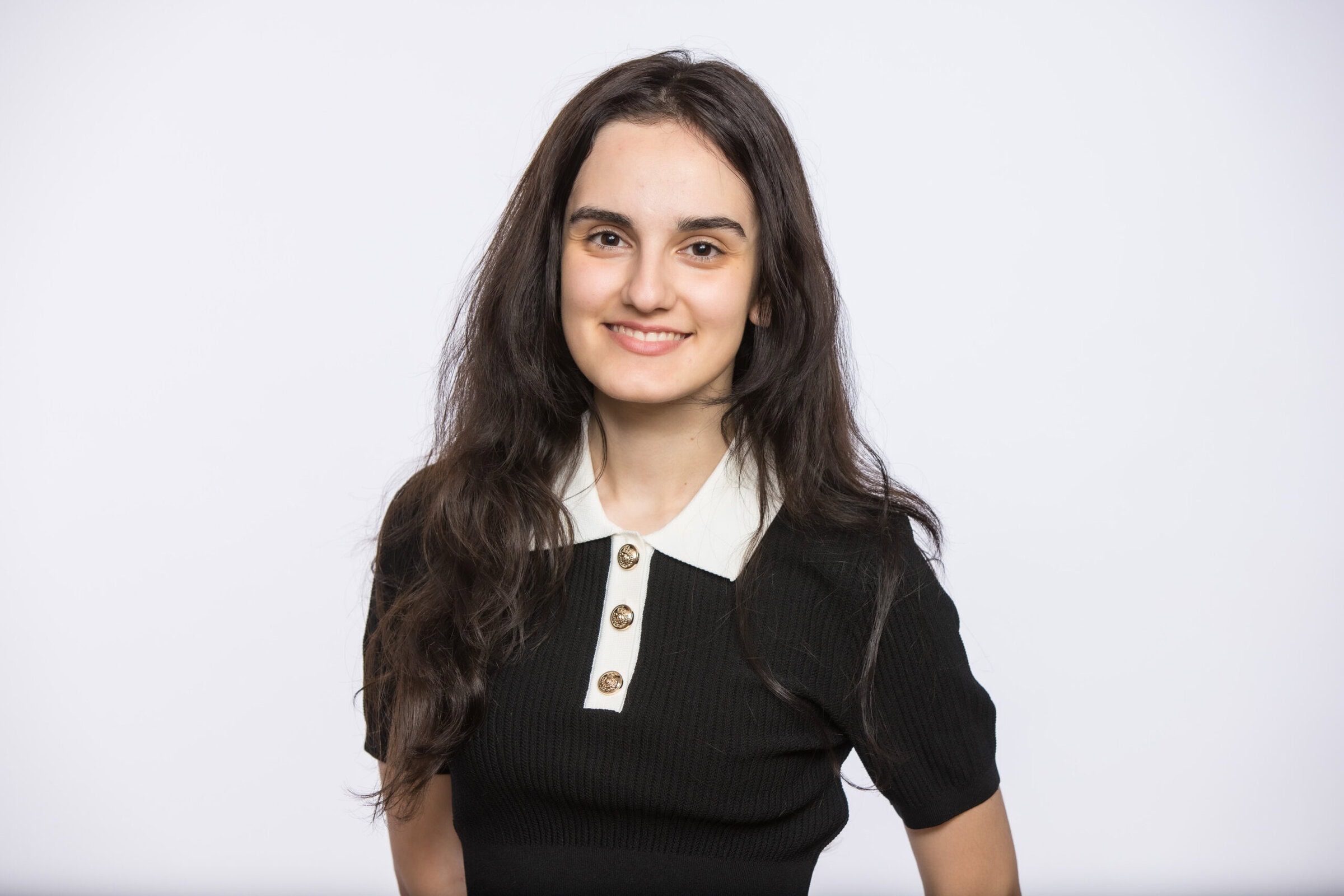
 Morehead-Cain Global Fellow Güneş Tuğcu ’26
This spring, the inaugural class of Morehead-Cain Global Fellows will conclude their year at the University of North Carolina at Chapel Hill. This miniseries of the Catalyze podcast highlights members of the first class, featuring global fellows from Nigeria, Turkey, and India.
In this episode, Ali Slack ’28 of the Scholar Media Team speaks with Morehead-Cain Global Fellow Güneş Tuğcu ’26 about her journey to Carolina, her experiences in the program, and how the year will inform her future impact.
About the guest
Güneş is a psychology and western languages and literatures double major at Boğaziçi University, passionate about science communication and accessibility. She co-founded a mentorship program for students affected by the 2023 earthquakes, is a staff reporter for campus journalism, and teaches English to underserved communities. At UNC, she is engaged in research in the Neurocognition and Imaging Lab, examining the neural substrates of complex cognitive functions. She is also involved in community engagement initiatives through the THRIVE Program, supporting outreach and service efforts for veterans and first responders living with traumatic brain injury. With a strong interest in the ethical, legal, and social implications of emerging neuro-technologies, she plans to pursue neuroscience and law, aspiring to contribute to the emerging field of neurolaw as an IP lawyer and researcher focused on responsible innovation and equitable access.
About the Morehead-Cain Global Fellows program
The Morehead-Cain Global Fellows program identifies, invests in, and empowers emerging leaders who seek to positively shape communities across the world. Global fellows pursue a fully funded year of undergraduate study and research at the University of North Carolina at Chapel Hill.
During their time at Carolina, global fellows engage in rigorous academics, immersive research, and meaningful cross-cultural exchange. The program includes funded travel within the United States, personal coaching from Morehead-Cain advisers, and yearlong leadership development designed to strengthen purpose, confidence, and impact. Global fellows return home with world-class research experience, an international network, and the skills to lead with clarity and purpose.
Are you ready to step forward and shape the world for the better? Learn more at global.moreheadcain.org.
Music credits
The episode’s intro song is by scholar Scott Hallyburton ’22, guitarist of the band South of the Soul.
How to listen
On your mobile device, you can listen and subscribe to Catalyze on Apple Podcasts or Spotify. For any other podcast app, you can find the show using our RSS feed. You can let us know what you thought of the episode by finding us on social media @moreheadcain or you can email us at communications@moreheadcain.org.
Episode transcription
(Ali)
Welcome to Catalyze. I’m your host, Ali Slack from the class of 2028. This spring, the inaugural class of Morehead-Cain Global Fellows will conclude their year at the University of North Carolina at Chapel Hill. The Morehead-Cain Global Fellows program identifies, invests in, and empowers emerging leaders who seek to positively shape communities across the world. This miniseries of the Catalyze podcast highlights members of the first class, featuring global fellows from Nigeria, Turkey, and India. In this episode, I speak with Güneş Tuğcu from the class of 2026 about her journey to Carolina, her experiences in the program, and how the year will inform her future impact. Güneş, welcome to the podcast.
(Güneş)
Thank you for having me.
(Ali)
To start us off, what’s been your favorite spot on campus so far?
(Güneş)
I assume this is a bit silly, but I think my favorite spot is probably my dorm room in Connor Residence Hall. The reason is, again, silly. However, back home I shared a small dorm room with 11 other girls. So having this wonderful room with a wonderful view and a wonderful single roommate has just been so refreshing. And just having my own space has been great, really.
(Ali)
Yeah, I mean, that sounds absolutely wonderful. What’s one small thing about Carolina that surprised you when you first arrived?
(Güneş)
I think it was just how warm everyone was. Everyone’s so open to talking with anyone and everyone about anything and just so open to helping. Everyone’s so inquisitive, which is so wonderful. No one takes things at face value. And it’s been, it’s just been so, I don’t know, eye-opening, I suppose. I’d say it’s definitely affected me into becoming more like that.
(Ali)
I remember I had a very similar experience when I first stepped on campus.
(Güneş)
Really? That’s wonderful.
(Ali)
Yeah, it’s a great community here. So, you’re double majoring in Western Languages and Literature as well as psychology at your home university. And these are two fields that approach the human experience in very different ways. So how do you see those disciplines coming together and the way that you see the world?
(Güneş)
So, the way I intersect my two fields is through this kind of niche interdisciplinary emerging field called neurolaw. I could kind of summarize it as the ethical, legal, social implications of emerging neurotechnologies. My interest in psychology chiefly lies in neuroscience, which brings the technical side to all of this, and English is a wonderful basis for the law through the critical analytical writing skills that it has provided me with.
(Ali)
I guess more as a personal interest question, do you find yourself more of a scientist or a storyteller, or is it kind of a mix of both?
(Güneş)
I think I’m a big mix of both. I don’t think I’m able to give up any of those. That’s why I had to go for something interdisciplinary rather than choosing one. I don’t see myself being completely happy with just one when there’s so much to explore with the other out there.
(Ali)
Yeah, that’s a beautiful perspective. Thank you. And I definitely see that in you. So before coming to Carolina, you co-founded a mentorship program supporting students affected by the 2023 earthquakes. Can you take us back to how that initiative started?
(Güneş)
The 2023 earthquakes were— I don’t really know how to describe it. Quite possibly the most devastating time of my life. More than sixty thousand reported people died in Turkey, and even more so not reported. And it was just— it was devastating. The earthquakes happened in thirteen cities. It was very, very close to my city. The city right next to ours is one of the thirteen. And it was, it was a very rough time. From my entire country. And I, the first few days, I was in shock, paralyzed emotionally, and honestly somewhat physically as well. My family and I, we stayed in a church because we were worried about our building collapsing because the earthquakes kept going on. We’d go back to our home thinking, oh, you know, the aftershocks are, you know, they’ve kind of dimmed down, we’ll be able to stay at home. But then it would happen again and we would freak out. We’d have to go somewhere that we knew was safe. It was just a very rough time for me as someone not in those cities. And I cannot even imagine what it must have been like to be in those thirteen cities.
(Güneş)
And because it happened in such a large scale, everyone knew someone that was there. Turkey, despite how big the country may be, is a very tight-knit community. And you have relatives or friends, just people you know in every city basically. And you kept hearing of people searching for their relatives, asking people to send some kind of help to their loved ones in need. And as students, we heard of our fellow students who are in high school and working for the university exam, which is in Turkey, it’s like the quite literally the most important day of your life. It shouldn’t be, in my opinion. But it is—it’s quite different than the US where you guys have, you know, SAT plus a whole holistic system. And what happened was, our version of the Red Cross, which is Kızılay, a red moon, they set up tents for the people whose houses had been devastated in, in the earthquakes. And these students who were living with their huge families in tiny tents had to work in little to no light, little to no heat. And honestly, most of them had absolutely nothing to work with as well.
(Güneş)
They all just, you know, got destroyed in the earthquakes as well. So we thought we have to do something about it. We’ve got a few months until the university exam comes. This is quite literally the most important thing for them. This is something we can do. And if there is something we can do, then we must do it. That was just a line of thought. And me and my friends, we got together. We reached out to other people that we knew were thinking of the same thing. We reached out to people we know that were in those areas. We reached out to just everyone we knew to reach out to their loved ones to ask if they needed help, if they knew of students that needed help, and we formed this chain of help. We had mentors that we matched up with, students who wanted to study the same thing as them. And it was as if you would meet with them as often as they wanted to. You’d tutor them, you’d make plans for them. And honestly, such close bonds were formed that I think it was some of the most important bonds that I’ve formed in my life as well.
(Güneş)
I myself tutored seven students and most of them went to the universities and the majors that they wanted to go to. And I’m so happy for them and I still keep in touch with them today. And I just, nothing makes me happier than seeing them thrive, especially after everything that they went through. And even today, if they call me up and say, “Hey, I kind of need some help with this or that,” right away. And I know that’s the same with my friends as well.
(Ali)
I love that. That’s beautiful. I was moved by what you said. It’s like, if you can do something, you must do something. I thought that was absolutely beautiful. How would you say that this experience has changed your sense of responsibility as a leader?
(Güneş)
I think it’s definitely made me more solution-focused. Whenever there’s a problem arises now, I definitely worry about it less. I definitely spend some time kind of going, “Oh no, why is that happening?” Yeah. I’ll ruminate for a bit, but now I’m much quicker in getting to, “Okay, what do we do? How do we fix this? What do we do about this? And, you know, just acting much more quickly these days. And as far as the teamwork that we all had during those times goes, not just between me and my friends that built the program, but also between us and the students that we helped, I now appreciate the value of asking for help, even when it’s uncomfortable, much more.
(Ali)
That’s wonderful and an amazing skill to have. Let’s talk about the Morehead-Cain Global Fellows Program and what initially drew you to apply.
(Güneş)
Ever since I was a kid, I’ve been obsessed with the idea of coming to the US, studying in the US, getting to experience culture here because most of my life has been shaped by, you know, American pop culture. I think this is very embarrassing to say, but at the same time, I’m proud of it. I have seen more than two hundred English-speaking TV shows. And I don’t even mean miniseries. I mean like 10-season proper massive shows. And that, for one, taught me English and gave me a deep appreciation for the culture that you guys have here. And I’ve always wanted to experience it firsthand. So I think it was just that dream that I’ve had since I was a kid and kind of like a, I don’t know, a promise that I had to myself that I one day would, just made me say yes to this new adventure.
(Ali)
I’m glad that the Morehead-Cain Global Fellows Program was able to help you fulfill a dream. You went through the final selection experience in Istanbul, and what was that experience like?
(Güneş)
It was definitely so, so fun. Going in, I was terrified because it was a dream to even be chosen as a finalist. I remember getting the call from Ben Ousley Naseman and just going— oh, the funny thing is actually in Turkey, there was a huge data leak. So, we get calls from different countries, like unknown numbers from different countries all the time. So, when Ben first called me, I declined two or three times before I accepted it because I was like, okay, scammer, go away. And then he emailed me and then I was like, oh, my god, I have been declining Morehead-Cain. So, I kind of punched myself about that a bit. But yeah, it was insane. And the finalist selection was just a dream come true. Again, it was terrifying, but it was the most wonderful environment to be in at the same time.
(Ali)
Were there any parts that challenged you?
(Güneş)
I think it was more my stress and anxiety that challenged me because I have to say, all the alums and the local leaderships and just all the other finalists made the environment such a warm, an easygoing place that it’s very difficult to actually, I don’t know, experience any real hardship other than the one that I was having inside me. But after a bit of time passed, I realized it’s not really about, you know, getting the fellowship, the Global Fellows program, but more about this amazing experience that I am having right here with these amazing people. And once I realized that that was the fact, that was the thing about this, it just became so much easier and I got rid of the stress and the anxiety and just went about enjoying myself.
(Ali)
I think that’s absolutely beautiful and a really good approach to life in general. Just getting through it, dealing with the inside, and then keep moving on.
(Güneş)
Exactly. It’s an experience.
(Ali)
Absolutely. So, one of the unique aspects of this fellowship is the freedom to design your own experience. So, when you arrived at Carolina, how did you think about shaping the rest of your year?
(Güneş)
Oh, when it was time to choose classes, I was very overwhelmed, I’ll say this, because Carolina offers so much about so many things. And I was like, oh my God, there is a trillion things that I want to try. That I’ll die if I don’t try. But the thing is, most of my friends, most of the other global fellows are doing gap years while I kind of have to transfer my credits. So, and doing a double major in order to be able to graduate, I need to take certain required classes rather than just get to explore anything and everything like my friends get to do. So I’m very, very jealous. So mostly I had to take neuroscience classes and English classes. But while I would definitely have loved to get to explore many other disciplines, I am very, very, very happy with the classes that I got to choose here. They’re all amazing. My professors are amazing. My classmates are amazing. And I just, in fall semester as well as now, I’m just having the most wonderful time.
(Ali)
I see, I mean, I see that you just have like such a wide range of interests, neuroethics, journalism, teaching, law. How did you prioritize which classes to take even within the specific departments? Because I know even as a student here, it’s— there’s so many offerings. How did you go about choosing which specific English class or neuroscience class?
(Güneş)
I think I kind of thought of it in a way that, would I want to take this here or would I want to take it at home? Can I take it at home? And kind of more focused on the stuff that I couldn’t take at home. And considering the fact that UNC is a wonderful research institute, I wanted to go for the classes of people whose research I admire, who also people that my friends recommended to me as well. Madeu, who is a global fellow from Brazil, recommended a class called Literature of War because he was obsessed with the professor. And now I am too.
(Ali)
I love that. As a student at Carolina, I know that there’s just so many different opportunities and so many things that we want to say yes to, but how— has it just been difficult to say no to certain opportunities given like a year of time?
(Güneş)
Definitely, because when you come here and you see all these, these classes, all these clubs, all these wonderful people, you just kind of have to manage your time somehow, which I’ll admit is not my strongest suit. So it was definitely rough having to choose between these wonderful opportunities. And it was— I think I am quite happy with everything that I chose, the way I spend my time doing research, going to class. It definitely was a rough process having to drop some stuff and pick up others.
(Ali)
I know, learning the power of no to say yes to really good things.
(Güneş)
Yes.
(Ali)
I feel that. Would you say that any of your priorities have shifted coming into school, things that you thought maybe would look different now that you’re in the year?
(Güneş)
I am studying so much more than I thought I would. Not that I’m complaining, I actually do really enjoy studying, weird though it may be, but I am, I am quite in love with my field. So studying is more of a hobby than it is a responsibility.
(Ali)
You’ve mentioned a strong interest in neurolaw, which sits at the intersection of neuroscience and legal systems. How has your time at Carolina helped you explore that space more deeply?
(Güneş)
So, using my Lovelace Fund for Discovery in April, I’m going to be going to a conference at Stanford of the International Neuroethics Society. So I honestly, I am so, so looking forward to it because the researcher who is the reason why I adore this field, that I actually found out about this field, its existence, is going to be there. And I am still kind of like shaking, thinking of the fact that I’m going to be able to meet him, speak to him. Because it just, I mean, a year ago that seemed like an impossible thing, right? Before Morehead-Cain, that was unthinkable. When Morehead-Cain happened and I wasn’t here yet, I had some idea that my life would change. However, I didn’t, I don’t think I quite grasped just what the extent of that would be. And now I realize that this is within the bounds of reality. This is something I’m going to be doing. This is going to happen in literally three weeks. It’s quite incredible. So these chances that Morehead-Cain has given me is just fantastic. So I’m definitely grateful and so, so, so excited.
(Ali)
Yeah, what a cool experience.
(Güneş)
Yeah, right?
(Ali)
That’s amazing. So you’ve now experienced both your home university and then also UNC. What differences have stood out between the academic cultures of the two?
(Güneş)
Oh, so this is a question that I think about basically every day, because the differences are so stark. And I’ve talked about this to so many people, people back home, to people here as well. Back home, the basic design of classes is you have 2 midterms, 1 final, throw in a couple assignments here and there, let them be random essays. And that’s it. Most of your grade comes from exams. So the amount of work that you’re gonna be putting in is, you know, more or less apparent. But coming here, I was definitely underestimating the amount of work that I was gonna have to put in, in every single class that I was taking. So I came here and I took my first STEM class here and I was completely lost. Like I am not embarrassed to say this because I am very proud of the way I kind of came back from that moment. But it was just so out of left field because I did not know the importance that you guys put on assignments because most of my grade comes from these random assignments or random quizzes.
(Güneş)
And first semester I had six quizzes and six assignments per week. I was like, who has time for this? I’m gonna go to my clubs, meet up with my friends, and do six assignments and six quizzes. And you’re gonna throw midterms at me soon? Like, what is going on? And I think the managing my time in that way and also trying to do, like trying to give the best work that I possibly can was quite daunting. And I struggled and, you know, I must have, failed at some places as well. But I got the hang of it as quickly as I could. Again, I am very proud of that because it was a new experience and I do think I handled it well. But it was rough. Definitely. It’s very different from back home. And I think this is better. I will definitely be honest. I think this is the way it should be because classes are so much more interactive. You’re actually learning stuff. You’re not memorizing. If you are memorizing, it’s, it’s, there’s a, there’s a purpose. It’s not just, I don’t know, mindless listening to lectures that don’t engage you at all.
(Güneş)
People actually care about what you’re doing. How are you doing in terms of classes and in general? The professors are very, very caring. And honestly, I’m so grateful for that. Not to say my professors back home aren’t, because they are wonderful, my God. It’s just the academic load here is definitely very different and the requirements, the things that the professors require from you, again, are very different.
(Ali)
During your time at UNC, has any one specific professor made an impact on you?
(Güneş)
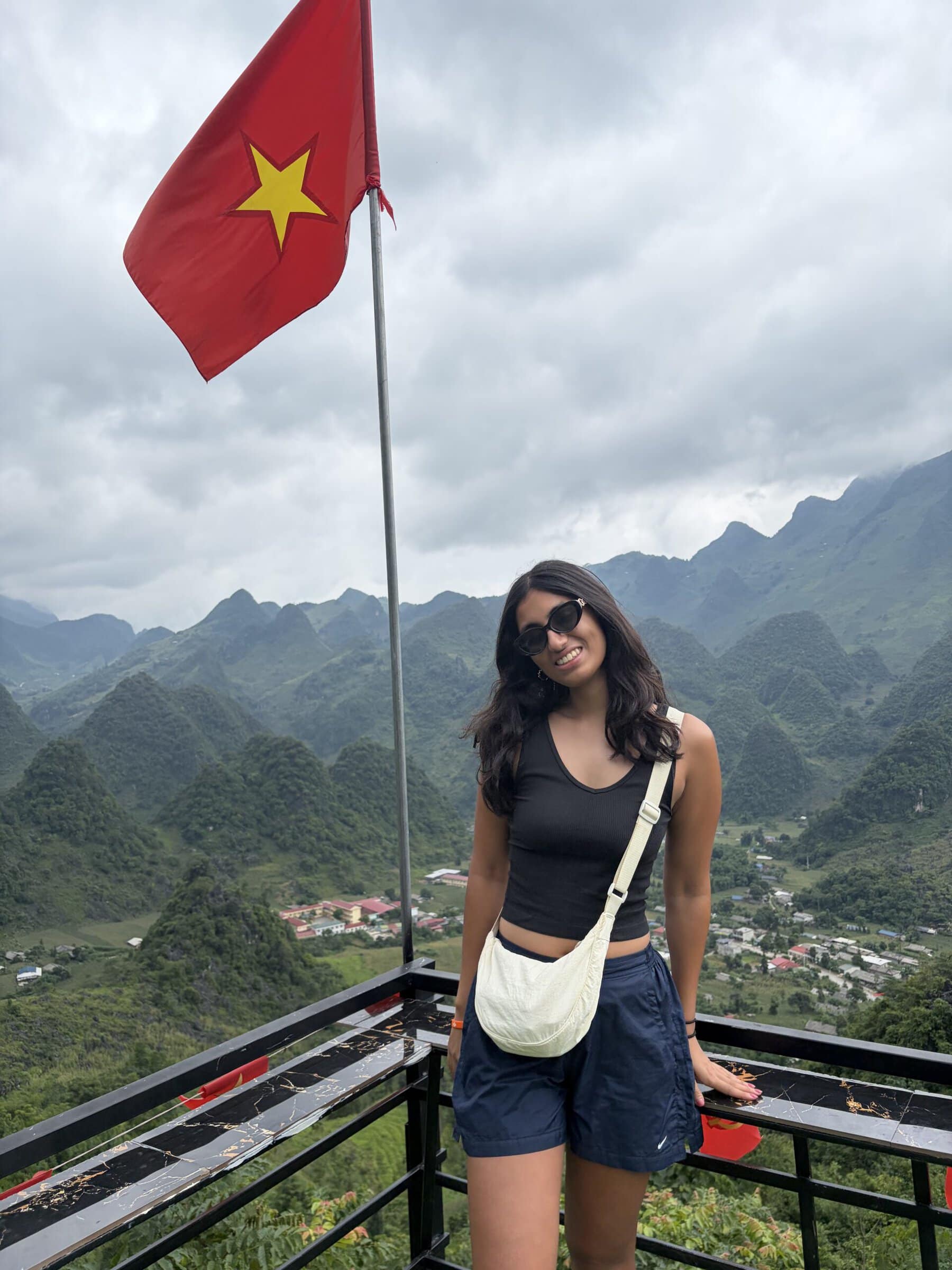
This semester, as I mentioned, at Madeu’s recommendation, I am taking Literature of War with Professor Hilary Lithgow. I think this class is the best class I have taken in my entire college career, not just my time at UNC. It’s beyond anything I’ve ever experienced. I am obsessed with it to the point of planning summer trips around the stuff that we’re learning. Like, I am actually planning a trip to Vietnam because of the stuff we’re learning about the Vietnam War, something I’ve never ever learned about before because, you know, Turkey was not in it, so it’s not a part of our history books. It’s just, I don’t know, it’s had such an impact on me. And she is the most attentive, the best feedback giver ever, honestly. All the papers that we give to her, she gives back with paragraphs of wonderful feedback of— honestly, not even feedback, conversations. She’s having conversations with us on the paper of the stuff that we wrote about. And it’s just so wonderful. It’s like the feeling of being heard, I suppose. And it’s it’s impossible not to love her because of it. It’s just, it’s been a wonderful experience.
(Güneş)
Last semester I had 8 AM classes every single day and it was a bit rougher, you know, just forming relationships with professors when you’re half asleep. But this semester I am much luckier in that case and I’m so happy this is not an 8 AM because this is just the most wonderful class. So to any students listening, take English 161 with Hilary Lithgow. Now!
(Ali)
That one’s been on my bucket list as well. I mean, I’m an English major and the department here is just absolutely lovely. Something that I really love as a scholar is just the Morehead-Cain Network. I know it’s completely— it’s incredibly strong and connected. So what has it been like interacting with other scholars and alumni here?
(Güneş)
Honestly, it’s been unbelievable. I remember finalists weekend, it was— I remember thinking, these wonderful, incredibly intelligent, incredibly accomplished people, what are they doing with me? But it’s just, I don’t know, I think everyone in a part of the Morehead-Cain Network is just so brilliant, so inquisitive. One thing actually that stands out the most, everyone asks the most amazing questions. I will say this, this is a skill that I need to learn. I need to ask better questions. It’s just been so wonderful having conversations with everyone everywhere, like in both alumni events and also just in the Foundation kitchen, because everyone asks amazing questions and everyone is genuinely so interested. You’ll mention this one idea that you’ve had and they’ll just right away go, oh, how can I help you with it? Oh, can I do this? Oh, maybe this. Hey, this idea. It’s just, you just bounce ideas off each other. And it’s just, it’s wonderful. It is. My horizon has been broadened so much in just a single conversation with anyone in just a random moment in the kitchen, it’s quite wonderful. It’s something that I definitely appreciate every day.
(Ali)
That’s something that I love too, walking in and feeling like a second home with just lovely, curious people. It’s absolutely fantastic. So I guess for students back in Turkey who might be listening and wondering if they’re ready to apply or if they should apply, what would you tell them?
(Güneş)
Something that makes me very sad and very angry about this mindset that Turkish students have is they think opportunities like the ones the Morehead-Cain Global Fellows Program has provided us global fellows are reserved for simply more privileged people. It is not. I do not come from, you know, a glorified background or anything. I am simply someone who has studied, has asked good questions, been curious about stuff that I’m interested in, tried to get hands-on experience in the stuff that I’m interested in. And and now I’m here. This is something they can do. They have it in them by simply being curious. This is something they need to realize. This is something that has been kept from them, this belief in themselves. It seems so far away, but it is, it is right there. It is right for you to take. And hey, what do you lose by applying? Really, what do you lose? If you get chosen as a finalist, it’s going to be the most wonderful experience that you’re going to have. If you don’t, well, you know what? Wonderful. Still, you tried. And you should try again and again. And you know, it’ll happen.
(Güneş)
It’s just, just believe in yourself and try. You can do it. This is for you. This community is for you. Do not think you are not worth it at all. This is not meant only for people unlike yourself. No, that’s not the case. And I’d really like them to know this.
(Ali)
That’s beautiful. How has this year shaped you as a leader, and what impact do you hope it will have when you return to your university and home community?
(Güneş)
When I go back, and actually even before I go back as well, something that I really, really hope to be able to do is shed some light on the otherwise mystified field of research. Here in one of the most famous research institutes in the United States. You have all these wonderful opportunities to get involved in research, to have conversations with people whose research has changed the world. You’ve got Nobel laureates here. You’ve got Aziz Sancar, our pride and joy of Turkey. He’s a Nobel laureate in chemistry and he’s a professor here. It’s just, these research opportunities are definitely not as many in Turkey, if any, actually. And what I really want to be able to do is bring back to Turkey this understanding that you can get involved in these things that you’re interested in, because I know for a fact there are people studying psychology or studying English who definitely want to go deeper into stuff that they’re interested in, in these fields. Like, for example, I have a friend who’s really interested in medieval literature, who would love to do more research into that, but is thinking of going into human resources instead—but these opportunities are there for you.
(Güneş)
You can do it. You just, because of the country that we live in and the limited opportunities that it has presented you so far, you kind of don’t know where to begin. So I hope to be able to, you know, lend a helping hand in terms of: this is an opportunity for you if you want to do it. Here is how to start. Here is how to write an email to someone that you’re actually interested in the work of. Here is how to contact them, and here is how to get involved in research. Here is how to find more. Here is how to write your own research paper—just try to become a guide to the research dreams that they have.
(Ali)
I’m excited to see the ripple effects of your hard work and your intentionality. To close, we’re asking all global fellows in the series the same question: What is the most powerful thing that you’ve learned through this experience?
(Güneş)
I think it must be the importance of interaction between different cultures. Here, I don’t just get to interact with American culture, but also with my fellow global fellows. Before coming here, I don’t think I was at all any particularly interested in Nigerian or Indian or Brazilian culture. I mean, not for any specific reason. I just, you know, was not particularly knowledgeable. And now I could not be more fascinated with their respective cultures. And I could not possibly be more excited to go to their countries and visit them and learn more firsthand as well. It’s just, I know it’s going to be fantastic.
(Ali)
Güneş, this is a wonderful conversation. Thank you so much for coming on.
(Güneş)
Thank you so much for having me, Ali.
(Ali)
Thank you for listening to Catalyze. I’m your host, Ali Slack, from the class of 2028. And that was Morehead-Cain Global Fellow Güneş Tuğcu from the class of 2026. To learn more about the Morehead-Cain Global Fellows Program, head to our website at global.moreheadcain.org. You can let us know what you thought of the episode by emailing us at communications@moreheadcain.org or by finding us on social media @moreheadcain.