William Cook ’26
It’s been nearly three years since the Morehead-Cain Foundation launched the Sophomore Selection process. The program was established to identify second-year students at Carolina who demonstrate exceptional scholarship, leadership, and character.
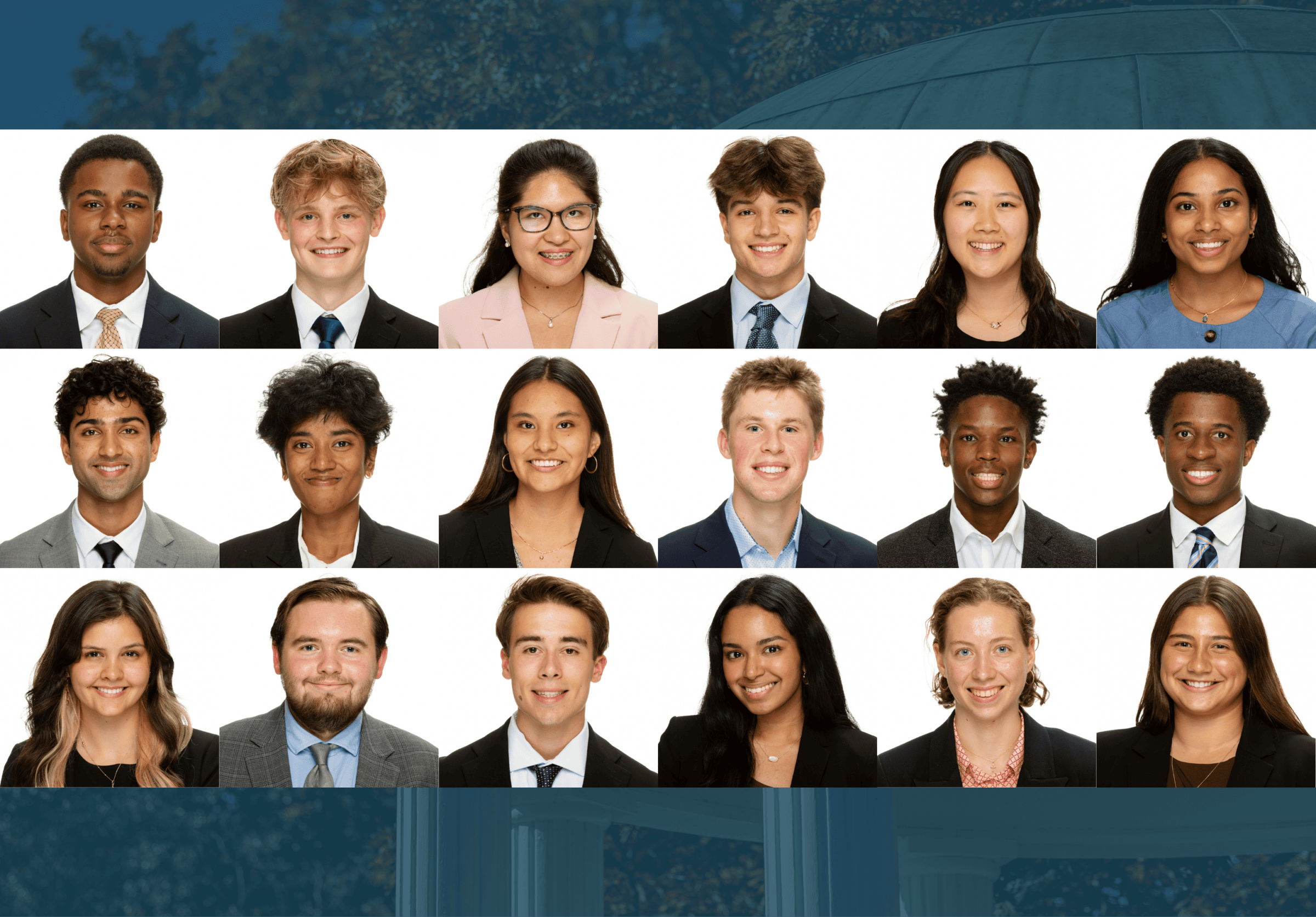
This year marks a historic milestone: the first class of Sophomore Selection scholars will graduate this May from the University of North Carolina at Chapel Hill. These fifteen scholars joined the Morehead-Cain Program in fall 2023.
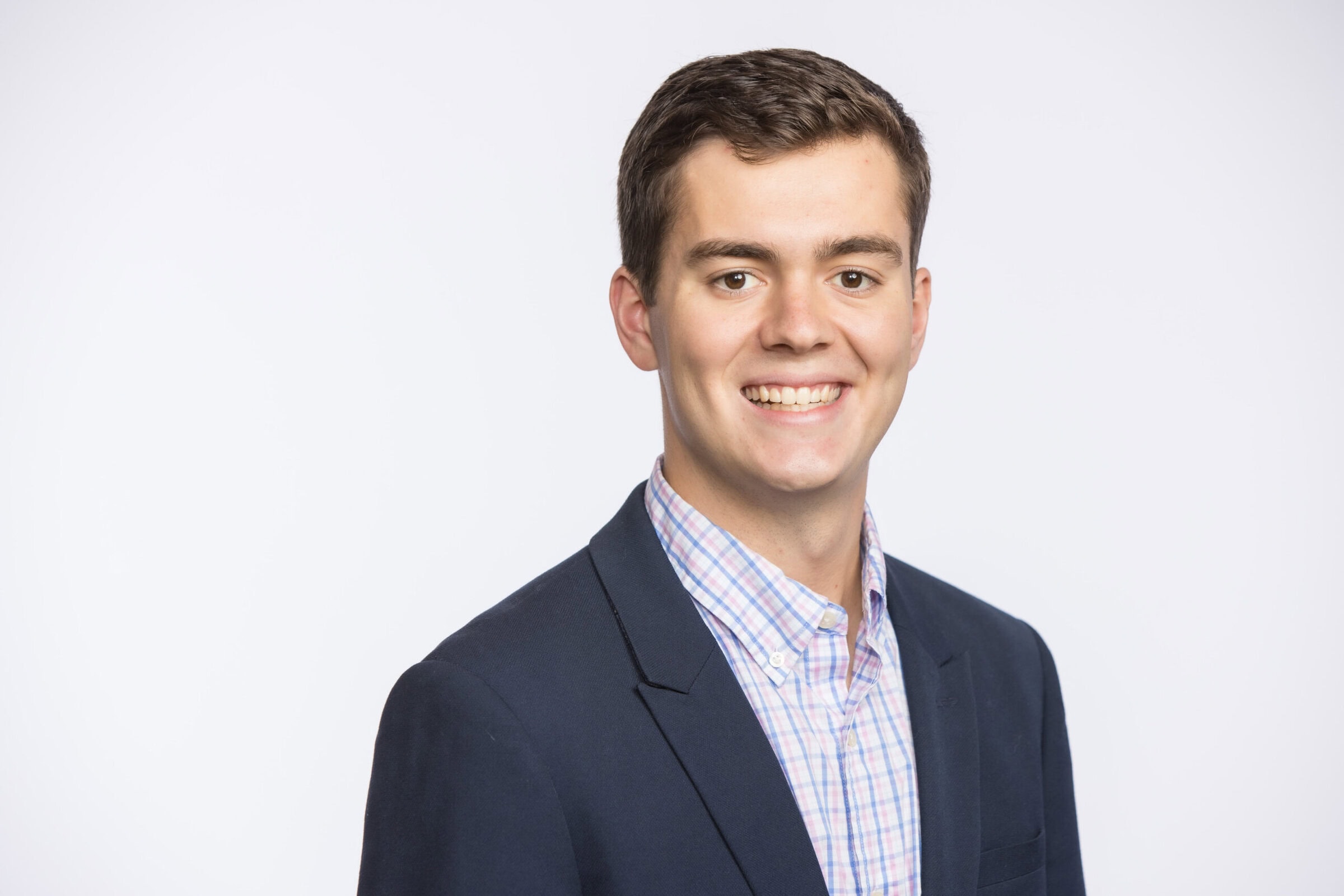
In this episode, host Oni Terrado ’27 sits down with William Cook ’26 of Nashville, Tennessee, to reflect on the experiences that have informed his vision of leadership, from job shadowing at a Nashville lumberyard to founding the Human Flourishing Initiative at Carolina, working with entrepreneurs in South African townships, and joining an industrial crane services startup in Chicago.
Sophomores are nominated through Morehead-Cain’s network of campus partners, including professors, department heads, teaching assistants, and staff from scholarship, service, extracurricular, and cultural programs. Morehead-Cain invites nominees to apply early in the fall semester. Learn more about the Sophomore Selection process.
How to listen
On your mobile device, you can listen and subscribe to Catalyze on Apple Podcasts or Spotify. For any other podcast app, you can find the show using our RSS feed. You can let us know what you thought of the episode by finding us on social media @moreheadcain or you can email us at communications@moreheadcain.org.
Episode transcription
(Oni)
William, thank you for being here.
(William)
Yeah, thanks for having me.
(Oni)
After talking with you on the phone, one might assume you’re an up-and-coming serial entrepreneur. You’ve launched ventures ranging from pressure washing to supporting entrepreneurs in South Africa, and you also lead a campus organization called Human Flourishing Initiative, where you host Socratic seminar–style conversations and lean into problem solving by listening to others. All of those are incredible attributes of a strong business leader. And before we dive into all of that, though, I want to start at the beginning. Tell us about your roots. Where are you from? What are you studying? And how did this entrepreneurial mindset first develop?
(William)
Yeah, awesome. I am from Nashville, Tennessee, and I study—I’m a senior here. I study business and history, specifically American history, and interest in business kind of came from my family. A lot of it comes from my grandpa, who is my role model. He’s awesome. He is the first person in my family to graduate from high school and then went on to University of Tennessee and then worked at Eli Lilly for a long time in pharmaceuticals but then started a venture capital firm with my dad. And so, I’ve been able to see how they interact and really impact the world for good through their kind of biotech investment portfolio and how they try to interact with doctors and allow for solutions to reach people that wouldn’t otherwise get to see it.
And then in high school, they had a program at my high school, Montgomery Bell Academy, where they put us to shadow with different leaders around Nashville. And so, I got paired with a lumberyard, a guy that owned a lumberyard, which was hilarious, and I didn’tknow it was going to be a great experience to start off with. But then about a week before, he texted me and said, “All right, show up at 4:30 in the morning.”
And I was like, okay. He said, “You’re gonna go on deliveries.” And so, I went out on delivery with one of his, just one of his delivery drivers, and he and I got to hear his story and how Mr. Hales, the owner of the business, really poured into him and heard stories alongthe day. I first met Ray at 2:30 that afternoon, so I spent all day with different people in the business leading up to him. And the whole, whole thing I heard was not necessarily much about the business, but all about how good of a leader Mr. Hales was and how much he cared for his people. From flying someone out to rehab and then having them back—that was the guy in charge of the yard, the yard manager—to this guy that I was on delivery with had been wrongfully arrested for not paying his property tax. And Mr. Hales had bailed him out, had him—it was on Thanksgiving—had him with his family for Thanksgiving Day, and then got the situation figured out. And so, all that I heard every day was like, or all throughout the day, that he really cared for his people.
And I was like, okay, I don’t, I don’t know where, where I will do that what it’ll be like, whether that’s lumber or something else, but I want to do what he’s doing. When that was, he was a business leader and he was like, I could do everything else I need to do at home, but I can’t replace the time that I spend with my people.
(Oni)
That’s really sweet. So, you said you’re from Montgomery Bell Academy in Nashville. What were your aspirations when thinking about college, and how did UNC first come onto your radar?
(William)
I think when I was thinking about college, I remember going on like fifteen college tours with my brother when I was like an eighth grader or ninth grader, and so I was like, I don’t want to go on any more college tours if I don’t have to, but then as I really started kind of diving into what I thought I wanted. I knew I wanted a place that would challenge me academically and somewhere that could do that in a lot of different areas, which I knew UNC could do because they across the board have pretty, pretty great programs. And then I also—my mom went here and my—both my grandparents lived in North Carolina at the time, and so I’d spent a lot of time here and really loved the combination of that academic kind of rigor with a really good sports culture and program that I was looking for and as a team I could root for, for the rest of my life.
(Oni)
And once you arrived at Carolina, you started diving into a number of ventures from the Human Flourishing Initiative to Honors Carolina Student Association Mentors Program. Can you elaborate more on these ventures and what pushed you to start building things so early on campus?
(William)
Yeah, I think the common word that kind of defined my first, or maybe just my UNC experience, is curiosity. I came here and was trying to figure out where I wanted to plug in. As an out-of-state student, I knew two other people other than myself, and so came in and, you know, checked out different clubs, fraternities, campus ministries, all sorts of different ways to get plugged in, and I had a mentor who kind of I met the first week of college that still is my mentor this day ask me, look at those organizations, look at the juniors and seniors in those organizations, and see if that’s who you want to be when you’re a junior or senior about to leave this place, because like you won’t exactly be like them, but the culture in those communities, if it’s a significant time commitment, will have an influence on you, and seeing how they turned out will be similar to the influence it’ll have on you. So that kind of shaped how I went about that, and I think that that allowed me to not commit to some things early on, which allowed me to have the space to be curious.
And so, he also told me to take a fun class every semester, like something that wasn’t related to my major, or kind of what I thought would fit into the vision of what postgrad life would be. And so, I took a class with Professor Larry Goldberg, who teaches such a unique class. He kind of gives you books before class that you’re going to read, and then he tells you the assigned chapters, and then anything goes. You can come in and talk about anything so long as you tie it back to somewhere in the book. And I thought that was really cool and allowed a lot of different perspectives to all be tied to one thing in class. And so that kind of unique style in terms of education, especially at UNC, there weren’t that many classes like that, led to me ask the question of why don’t I have this type of experience somewhere else in other classes? And so, a friend and I started the Human Flourishing Initiative out of that, of like creating a space where that could happen. So, we initially started doing readings, kind of pairing an older writing theory of government like Locke and then pairing that with a modern contemporary writing.
And then that launched into, okay, what does this word flourishing mean, and what does that mean on campus? How are we doing flourishing-wise? Which is a weird question to try to ask, but we figured out that UNC only had detriment-type testing, so they knew who was doing bad and why, but they didn’t necessarily know a wide swath kind of reading on how people are doing. And so, we were able to partner with the Harvard Flourishing Initiative, or Harvard Flourishing Program, to bring in a survey to help the administration kind of know what was going on.
(Oni)
That’s a really cool initiative. So now we’re in your sophomore year, and you mentioned that you didn’t expect your mentor to nominate you. Could you share with us who your mentor is and how did you meet them, and why did their nomination surprise you?
(William)
Yeah, so my mentor is Madison Perry, who leads a campus organization called the North Carolina Study Center, and I met him—
They do a pre-, like, class-starting camp right before classes start in August of freshman year called Carolina Wake Camp. And he, during one of the open talks that he was, he was going up there and sharing, he kind of mentioned like, it’s going to be overwhelming. There’s going to be a lot of things that you can commit your time to, and this was specifically for the North Carolina Study Center, is like a center for Christian thought on campus, so they kind of—it’s an introduction to what Christian life could be like at UNC. And so, he was like, there’s going to be all sorts of different people vying for your time, and he said, if you ever need anything, like, call me, here’s my number. And I’m the type of guy that will take someone up on that. And so, like, two weeks later, a week later, I was like, I don’t know what I should be committing my time to. And so, I was like, oh, I know someone that offered to help. And so, I called him and we met and then have met pretty much every week ever since. Yeah, so we had gotten close over freshman year and then yeah, I got this random email, uh, that was like, Madison Perry nominated you for this thing.
And I, like, nobody really had heard about it, uh, what was going on specifically. If you weren’t a Morehead-Cain, you didn’t know what was going on with the new process. And so, uh, yeah, I texted him, and I was like, is this—this is a weird joke, but it doesn’t feel like this thing is happening. And he was like, no; I got an email—I got an email, and this is happening. Like, there’s an application and we’ll see how this goes, and kind of the rest is history. But yeah, Madison’s been—meant a lot to me. Both pushed me in kind of what I decided to do extracurriculars-wise. He was our sponsor, our faculty sponsor for the Human Flourishing Initiative, and has pushed me kind of with friends, academically, and kind of in all areas of my life, which has been sweet.
(Oni)
That is really sweet of him. And so, as you went through the selection process, was there anything that surprised you, especially as you advanced to the next stages?
(William)
It was the Sunday of our fall break sophomore year that we came back, and it was kind of an all-day, all-day thing. And you get, you know, you have the range of emotions from different people. Some people were excited, some people weren’t, or just nervous. And I think everyone was excited. It was how they were dealing with that excitement. And I loved it because I love those types of things. Those are fun to go into. I think the most interesting thing was that we had a group kind of exercise where we went into a room and we like got a role in like a mock, like, board meeting to discuss—it was like a new initiative on campus—and it was so fun to like, we just sat there for forty-five minutes and we’re like in our role deciding like, okay, how would we move forward with a decision, and like, how can we interact with the different stakeholders and what their priorities are, which is super fun. And then the alumni interview was awesome. I met one guy at that, Ron Boatwright, who’s awesome. He does a lot of things with the Foundation now, but he sent me a really kind note afterwards just about how much he loved our conversation.
And so it felt less like an interview and more like a conversation where I was getting to know them and what they were like and what their experience here was, and then they were obviously trying to figure out what type of person I was and what type of leader I was trying to be, but I remember those being really fun aspects.
(Oni)
I really appreciate you sharing that. Leaning into self-awareness, what has been your most influential Morehead-Cain experience so far? Was it during your Outdoor Leadership, Civic Collaboration, or your Professional Experience, and what did you actually work on during those experiences, and what did it teach you?
(William)
Civic Collaboration was a real kind of pivotal part of, as I’m trying to figure out, I don’t know, my career process of what I think will be next. I was working in Grand Rapids, Michigan, for Corewell Health for our project goal was to figure out how they could better utilize virtual technologies to increase interaction with marginalized communities. And so very much like a consulting type project where you go in and interview stakeholders and figure out what might be the most impactful solution, not just theoretically, but as it played out, of how could you get more people involved. It was really cool to see the different types of people that would be involved in a decision like that. I didn’t necessarily—I wouldn’t have thought going in about all the different types of people that influence a decision like that, from kind of the community health organizations to—I don’t know, we went into a homeless shelter that has a way for homeless people to get medical care, and then we talked with someone else that works on like different affordable housing projects. Then we talked to different doctors that are doing different initiatives, and then people that work with rural communities.
There were just a lot of different angles to go into that, which was cool. And I think one of the most impactful parts was that was the first group project where it was like there were five people that all wanted the best out of this thing. I think school projects sometimes can be hard and are not necessarily the most real-world experience of how group projects will work. I think we were, we were all bought in and wanted the best to happen and to present the best case, and it was, it was a really good experience to figure out how group dynamics can work when like multiple people think that they have the best way forward. So, then it’s like, okay, how do we, how do we dive into that, and how do we come up with something that we think would be a good combination of both? Which I think allowed for a more real-world understanding of group projects or collaboration in a job post-grad.
(Oni)
Thank you. I’d love to dive a little deeper into each of the summer experiences, starting with your outdoor leadership during spring break. Where did you go and what kinds of challenges or activities were part of the experience, and how did that push you personally or as a leader?
(William)
Yeah, so we did Outdoor Leadership over spring break like you mentioned, and we were in the southeastern part of Utah in the canyons. It was like a canyoneering course with NOLS, and it was awesome. I grew up in Scouts kind of my whole life, so I just always spent a lot of time outdoors, and my dad loves that stuff too, and so I had a really good time because I was used to staying nights in tents and sleeping under stars, but it was a really, really cool way to initially meet kind of our, I don’t know, our class of the Sophomore Selection process. And I think it really bonded us from the start of just everyone had different comfort zones going into it and felt differently about, you know, sleeping in a tent and not being able to shower. But I think by the end it had bonded everyone of like, yes, it was a stretch experience in different ways for different people, but it was fun to be able to do that. And then you get to kind of get a taste of what leadership might be like through—they have you lead different hikes.
And because ours was a shorter program, we got to do a little bit less of the solo travel and sort of thing that the month-long ones in the summer get to do. We still got a taste of what, what that was like and kind of figured out the different leadership styles that others in our class had and how I think that was a good reflection on what my leadership style was. And like, I love to lead out front, but then that meant that I needed to do a good job of supporting the people that weren’t as outspoken, which was really fun learning. And it was beautiful. And, you know, sleeping under the stars is a pretty cool feeling.
(Oni)
I loved my Outdoor Leadership. So earlier, you talked about the Civic Collaboration experience. So, we’ll move into Professional Experience. And what role did you take on, and what did that experience teach you about working in a professional environment?
(William)
I remember after Civic Collaboration, I loved coming up with the process, loved kind of being able to present something that I thought really would make an impact. But I was kind of frustrated that I was having to leave, and I wasn’t going to be able to implement what I thought would work. And so, I was like, okay, maybe I don’t want to do consulting for this summer. So, I worked for a nonprofit in South Africa called Reconstructed Living Labs, and our labs does a lot of work to help people in townships kind of learn entrepreneurial skills to be able to kind of rise out of the current situation they’re in. And there’s a lot of; there’s a lot of social and political factors in South Africa that are kind of crazy and would take their own podcast to explain and probably wouldn’t do it justice. But R Labs does a really cool job meeting people where they are and kind of with a range of, range of programs from people that haven’t graduated high school all the way to people that are three years into a launched venture. And so, I got to see a lot of different stages of ideas, and that was great.
I just was a little bit frustrated by how nonprofits can sometimes be slow, and so it felt like, okay, I got to implement the impact that I wanted to do that I didn’t get in Civic Collaboration, but it felt like I wanted to be doing a little bit more, a little bit quicker. So then, through a lot of conversations, I finally landed with an industrial crane services business called CraneTech in Chicago, which I didn’t know existed. And it was really cool. They were building kind of the first national brand of industrial crane services. So, it’s not the cranes that build things; it’s the cranes that move material in factories. And they do a lot of the inspections and now are getting into the actual manufacturing and setting up those, those cranes. And so, I was working on the strategy and operations team under the guy in charge of operations and got to see everything, which was fun.
They have a small, small, but nimble team that does a lot of random things, kind of all the things that need to happen for this new business. They were about two and a half to three years old when I joined them. And it was super cool. Got to interact with their president of sales, Chris Peña, who started as a technician in a different technician role in the crane industry and worked his way up to be the president of sales. And it was really cool to just see his kind of jump-starter attitude and wanting to kind of improve, and they really cared about their technicians, which was really cool to see that impact. And most, most decisions came back to how will this affect our people on the ground, which was cool and kind of tied to that impact experience that I was seeking from my previousexperiences.
(Oni)
So, you mentioned study abroad and you mentioned you went to South Africa. So, when you decided to go to South Africa, what interested you the most about it? Was it purely the nonprofit work or was there something else?
(William)
One thing is I needed more honors credits, and that was, that was an easy way to get it. And the way that the Honors College here designs their study abroad programs is pretty unique. They have two in London and Cape Town, but you do internships four days a week and get class credit for them, and then you go to class on Fridays, which was pretty cool and kind of a neat way to not just, you know, go somewhere else and take a class, which I was like, I almost would rather just do that at UNC if I was doing it. If I’m going somewhere else, I want to have a different experience, and that’s what this allowed me to do. And yeah, I think also as a business and history major, I don’t know how many better combinations there are than South Africa with an evolving economy and just such a rich history of different things. And with the apartheid so recent there, they’re still kind of grappling with what that means as they’re moving forward, which was just a really cool, neat experience of being able to see how kind of history was impacting business in the nonprofit space and how the reaction to the apartheid government kind of set up different grants that then incentivized different things in the business kind of field, and then that was shifting when I was getting there, and so it was a really cool combination of those things.
And you got to live with a UNC cohort and learn from—a UNC professor was with us, and then there was also a local professor that taught us.
(Oni)
That sounds like a wonderful experience. So now, looking back on all of those, you’ve learned so many lessons and turning points, and the Morehead-Cain community often speaks at length about leadership and service. How have all of these experiences shaped the kind of leader you aspire to be?
(William)
It really made me want to care about the people. I was already wired towards that from my family and just honestly from my faith background as well, of really prioritizing people and them feeling supported and knowing how their role is contributing to a larger picture. I got to see little tidbits of how that was the case. In different situations, different experiences, which is super fun. I think something that has been really impactful as I’ve kind of led into different things is knowing my answer to why I’m doing something. And specifically, before I’m talking to someone, asking them to help me with an internship or with a job or something like a club on campus or different things. I think understanding my why of like, okay, here’s what I’ve done in the past and here’s what I’ve learned from it and here’s why I think this is the next step I should take, or here’s the reasoning for why this is the path forward for this organization or this type of thing. I think spending that time of reflection beforehand has, will be a key facet of how I’m a leader in the future because yes, as a leader, you’re kind of called to make a decision with like 50 to 60, maybe 70 percent of the information, but that doesn’t mean you can’t take a second to be like, okay, what are the inputs that are getting put in right now, and what will that effect be? And then, okay, why are we moving forward with what we are?
(Oni)
Thank you. Over the past four years, you’ve learned a lot about yourself, and with graduation coming up in just three months, how do you feel about being in your final semester, and what emotions come up?
(William)
Yeah, I think honestly, it’s a mixed bag of emotions. A lot of excitement for what is to come and the opportunities that might be out there, and I don’t know what they are, and that’s part of the fun of it. Most of the people that I’ve talked to had no idea the job that they’re doing right now existed when they graduated college, so that—that gives me hope that there’s really fun and impactful things coming, and that hopefully I’ll be in those spots. And honestly, a lot of it is kind of trusting that I’ll be put in the spots where I can make that impact if that’s what I’m supposed to make. But I think it’s also sad. I was talking the other day to my dad and a group of people, and I was like, he was the dad that like, he walked to the college campus and was like, “Oh, remember, like, I remember that building, and this happened here, and this happened here.” Happened here, and I always thought that was corny, but I’m like totally going to be that person in like five or ten years walking back at UNC and talking about, oh, I remember this happened here at the Study Center, there’s a foundation here, oh, I had a class there like at Lenoir and eating cholinade in the bottom of Lenoir.
Like, that is totally going to be me, and so I’m a little bit—I’m just a little bit sad. I’m really grateful for the memories that this place has allowed me to have. I think it’s, it’s such an awesome just like college and college town that you get to like to experience the different parts of it, and there’s, there’s also the perfect amount of just enough that there’s always something new to do with like the old familiar things still being there. So, like I hope Sutton’s is around twenty years when I come back, and I get to, you know, sit in the same booths that I did when I was a freshman trying to figure out life and that sort of thing. So yeah, I think definitely a mix of emotions. I’m excited to get out and be able to do some things, but I’m really grateful for the kind of platform that this place has laid.
(Oni)
That’s really sweet. Not only are you graduating from Carolina, but you’re also part of the very first class of Sophomore Selection scholars to graduate from the Morehead-Cain Program. What does that historical significance mean to you?
(William)
Yeah, I mean, I think being the first of anything is always kind of fun, always kind of cool, kind of got the questions from the next cohorts of like, what is it like? What’s changing? Like, what’s—what does it feel like to be a part of the Program? And I think a lot of the questions initially were like, how well, like, plugged in do you feel into the Morehead-Cain community? Which I think testament to the kind of the Morehead-Cain community that already existed, like, just felt so immediately welcomed. Didn’t even—didn’t feel like there was much difference between, like, me or someone that got it in high school. Immediately became friends and immediately plugged in. A lot of my friends were already in the program, which was fun, and got to experience a lot of cool speakers. And I think a really fun thing about doing the Sophomore Selection process is I had been able to see the different types of opportunities at UNC, but I almost just got a little bit more, I don’t know, encouragement to explore those things through the Morehead-Cain and kind of encouraged to make an impact on campus and leadership involvement in different areas, which, like, I already was doing, and then I just got even more opportunity to explore that and more people to talk about that with, with other people that were leaders on campus, which I think was, was really awesome.
So, I hope that it continues in that way of bringing in people that want to make an impact and kind of giving them more of a platform to be able to do that.
(Oni)
And you mentioned talking to incoming Morehead-Cain Scholars. So, what advice would you give to an incoming Morehead-Cain Scholar, and how would you define success at this point in your life?
(William)
To an incoming scholar, I would say, yes, there’s a reason that you kind of got the Morehead-Cain Scholarship. There’s a lot, there’s a lot of potential that the Foundation sees in you, but don’t let your previous kind of experiences dictate what you’re going to do next. There’s so many things here at Carolina, and it’s easy to see the first thing that you can make an impact on or the first thing that you could dive into and make that be your thing, but I think you’re almost missing a part of the beauty of Carolina, of taking some random classes, taking, going to some random club meetings, going in and really seeing the diversity at Carolina of majors, of clubs, of belief systems, of political beliefs. Like everything is just, there’s just completely different people here, which is awesome. I think itadds to the richness and uniqueness of this place. So, I would say like, hold your curiosity close and don’t let that die down too quickly because I think the more experience you have, it kind of increases the different inputs that you have. And so, it might sound weird, but your outputs become richer because you have different experiences that you’re pulling on.
So, I’d say, yeah, be curious and kind of, I don’t know, explore all the different ways that Carolina has for you to do your college experience. Success has definitely changed in my mind over college. I think coming in, it’s easy to be kind of accolade-oriented of what success is, of having the best internship or going to the best college out of high school. And it’s easy, especially if you’re coming to Carolina or coming in as a Morehead-Cain Scholar, to kind of feel like, okay, I’ve been successful. Like, this is kind of a stamp of approval on my success. But my look now is kind of different. I would almost caution towards that because that leads to a little bit of potential complacency and not kind of keeping on being curious and keeping on the paths that got you to the current spot. Like, I think it’ssuccessful and I had a successful college experience because of all the different random things that I did. And I feel like I, I went down multiple different avenues, like Charles Konkolics and I, another scholar of the class of 2026, we like to have a monthly interestingperson conversation.
It’s just someone random, sometimes in the Morehead-Cain network, sometimes not, sometimes just one of our random friends from home’s dad, like something random. And for example, we got to learn from one of Ben’s friends about the interaction between gateway communities and national parks in Alaska is what he works on, and how like, how like the towns right outside of a national park’s entrance interacts with the national park and how their kind of relationship can blossom and really be aligned on what their goals are. Something I didn’t even know I could have maybe been curious about or learned about in college but happened just because we kind of set aside this time and we were like, okay, we want to find an interesting person. And we were talking to Ben one day,and he was like, oh, I have this other friend that you should talk to. So, yeah.
(Oni)
Thank you. Hearing your story, your gifts, and your curiosity has truly been a pleasure. So, as we close this chapter and look ahead, what’s next for you after graduation and what excites you most about this next chapter?
(William)
I don’t know what I’m doing, which is kind of fun at this part. Most—it seems like other people do, but a lot of people still don’t know what they’re doing as well. I am trying to find somewhere in the business world that I can learn a lot from. I think eventually I’ll want to do my own thing, whether that’s actually starting my own thing or entrepreneurship by acquisition. I have no idea what that might look like one day, but my goal right now is to find somewhere that I can learn a lot about business from someone that is doing business well and is well respected in how they do it and also kind of knows their why about why they’re doing business and why they do the other things in their life and kind of where they’re pouring into. And yeah, so I’m excited for that in postgrad. I think I’m also excited for the chance to kind of build something, whether I think like long term you’re, you’re, you’re building a family and kind of building on kind of my how I was raised and how my, my grandparents raised my parents, which my family is like a huge blessing in my life.
And they’re always in my corner and kind of raised me in a way that I’m really grateful because it allowed me to kind of have this. I’m really rooted in my faith from how they raised me, but also really, they modeled how to interact with the world really well, which was super cool. So, like, yes, building a family, building a company maybe one day, but also just building lifelong friendships. I think there’s some sweet, sweet beauty that I’ve seen come out of parents’ lifelong friendships and other people that I’ve seen post-grad, and so I’m excited for what that may hold. And as much as I wish I could stay in college, I think that kind of the college phase has a fixed amount of time in our life for a reason. I think you’re supposed to be taking all these inputs and doing all this kind of exploratory work to then be able to go out and make an impact on the world, and that will change, of course, and I don’t even know how that will actually play out in five years, let alone one year from now, but I’m excited.
(Oni)
That’s very insightful. And to close us out, if you had to describe your college journey in three words, what would they be and why?
(William)
I’m going to say hopeful, exploratory, and fun. College is a lot of fun. I went to a lot of fun sporting events. I don’t think I missed a home game this—a home basketball game this semester except for Christmas break when I was home. So, like, I had a lot of fun. Undefeated home season. But also, with friends. Super fun getting to know a new community of people, especially being from out of state. I think exploratory is kind of self-explanatory based on how I’ve talked about just curiosity has led me to a lot of different avenues and different ways to explore Carolina from different clubs, from HFI to eventually leading me to Morehead-Cain through the Sophomore Selection process. And I think hopeful because I think my experience has shown me that, I don’t know, the next generation really does care about what’s going on. And so, I’m really excited to see what we all do, and hopefully we can help each other towards our, our different paths of how we see the future unfolding.
(Oni)
So, well, thank you so much for speaking with us, William.
(William)
Yeah, thanks for having me on. It’s always, it’s always great. Gave me some time to reflect on what an impactful experience it’s been with Morehead-Cain through the Sophomore Selection process and at UNC. And I’m biased, but I think it’s the best university ever.