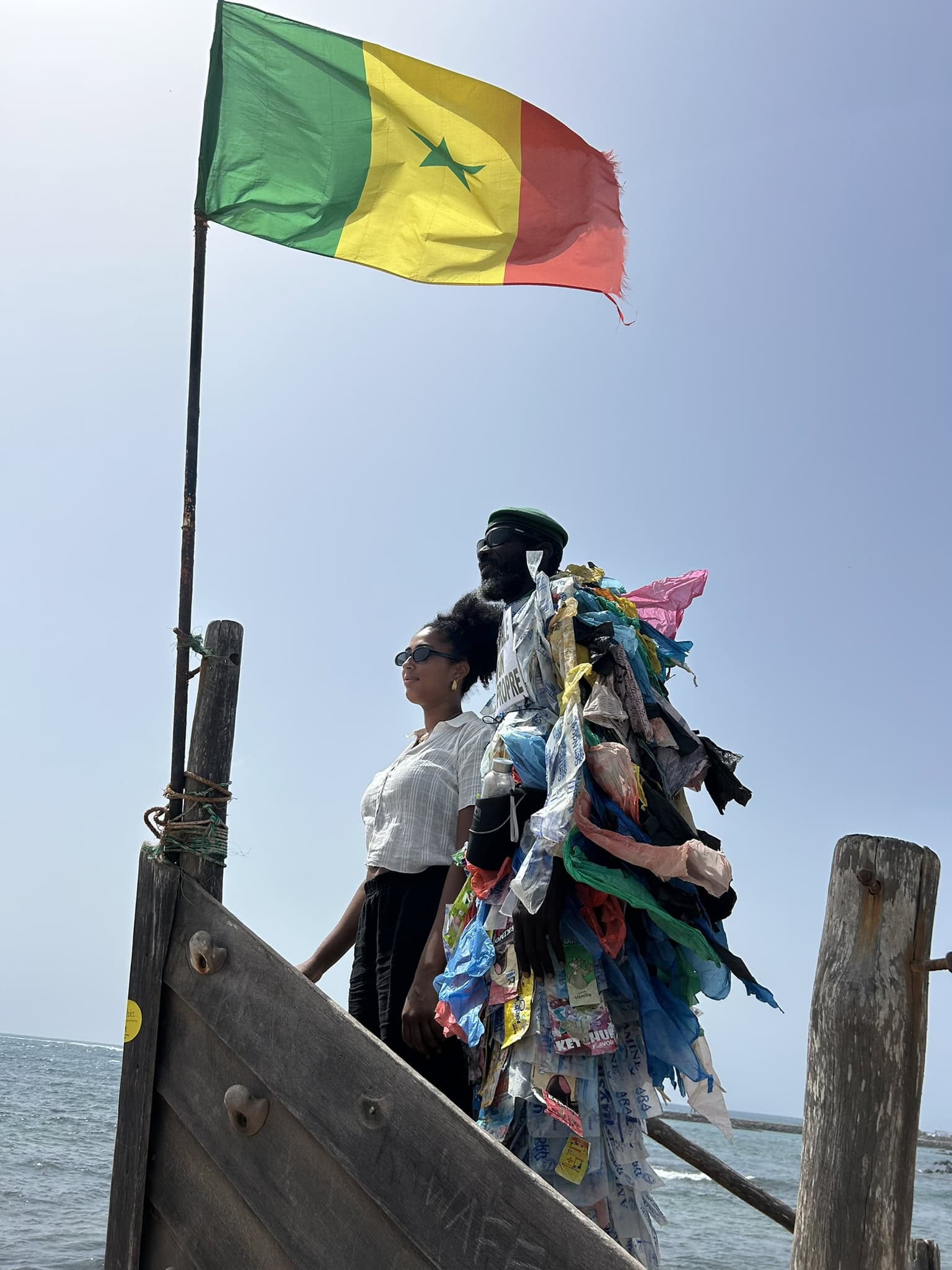
Anjali Sankale ’28 stands beside environmental activist Modou Fall, who wears clothing made from discarded plastic, near the shoreline at Pointe des Almadies in Senegal.
Anjali Sankale ’28 spent her Global Perspective summer in Dakar interviewing designers and artisans about sustainable fashion, and came home with a new framework for thinking about environmental systems.
The constant clacking of looms filled the room.
Inside textile designer Aïssa Dione’s large atelier in Dakar, weavers moved between machines, colorful threads, and large rolls of fabric. The energy, noise, and movement helped Anjali Sankale ’28 understand something crucial about the research project she’d come to Senegal to conduct.
“It really helped me understand how many people, materials, and steps are involved in producing a single textile,” she said.
For an applied sciences major on the environmental engineering track spending her summer exploring sustainable fashion practices in Senegal through Global Perspective, that atelier became a classroom. And what she learned there would change how she thinks about both fashion and engineering.
Weavers work at large wooden looms inside textile designer Aïssa Dione’s atelier in Dakar, Senegal.
What sustainability actually means
Anjali came to Senegal with a question: what does sustainable fashion mean when you’re creating it, not just consuming it?
She designed her own independent research project, interviewing designers, textile artists, entrepreneurs, and artisans across Dakar about their creative processes, material choices, production challenges, and perspectives on environmental responsibility.
She also translated her research into a fashion magazine, bringing together the designers, materials and questions that informed her summer.
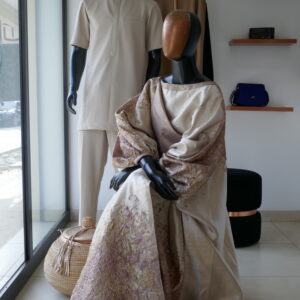
Garments and accessories by the designer Fatima Ba of So’Fatoo displayed in a Senegalese fashion studio or boutique as part of Anjali’s research into local design and sustainable practices.
She visited boutiques and ateliers. She observed production techniques. She documented different stages of textile-making.
She also compared approaches, from local sourcing and reuse to natural dyeing, weaving, and upcycling.
She adjusted her questions based on what she learned, working to understand sustainability through the perspectives of the people actually making things within Senegal’s fashion industry.
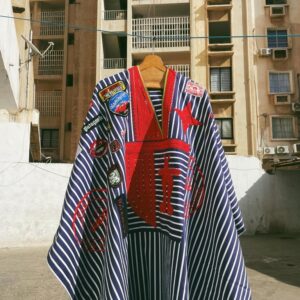
A striped garment by the designer Khadija Ba of of L’artisane decorated with appliquéd patches and textile details, photographed in Dakar, Senegal.
And what she discovered was that the simple definition she’d started with wasn’t simple at all.
When busy people share their knowledge
What surprised Anjali most wasn’t the complexity of the production process or the variety of approaches to sustainability. It was the generosity.
“I was surprised by how willing people were to share their time and knowledge with me, even though many of the designers, artists, and artisans I met had extremely busy schedules,” Anjali said. “They welcomed me into their ateliers, explained their processes, showed me their work, and spoke openly about both the rewards and challenges of working in Senegal’s fashion and textile industry.”
She spent a day with Kate Lancaster, co-founder of Bolé, selling vintage textile necklaces at a local market, learning to see sustainable fashion from the consumer’s perspective.
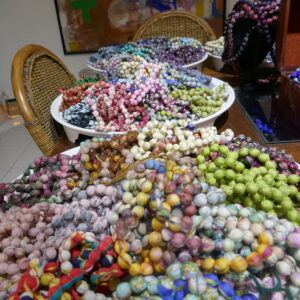
Vintage textile necklaces displayed at a local market in Dakar, Senegal. Anjali helped Kate Lancaster, founder of Bolé, sell the necklaces and observe how shoppers responded to their materials and stories.
Throughout the summer, she also met with designers, textile artists, and artisans across Dakar including Aïssa Dione, Johanna Bramble, Fatima Ba of So’Fatoo, Khadija Ba of L’artisane, Wagane Gueye and other makers working across weaving, dyeing, garment design, and material reuse. She visited the Azzedine Alaïa exhibition held in his former studio, seeing how Africa influenced his designs through materials and forms.
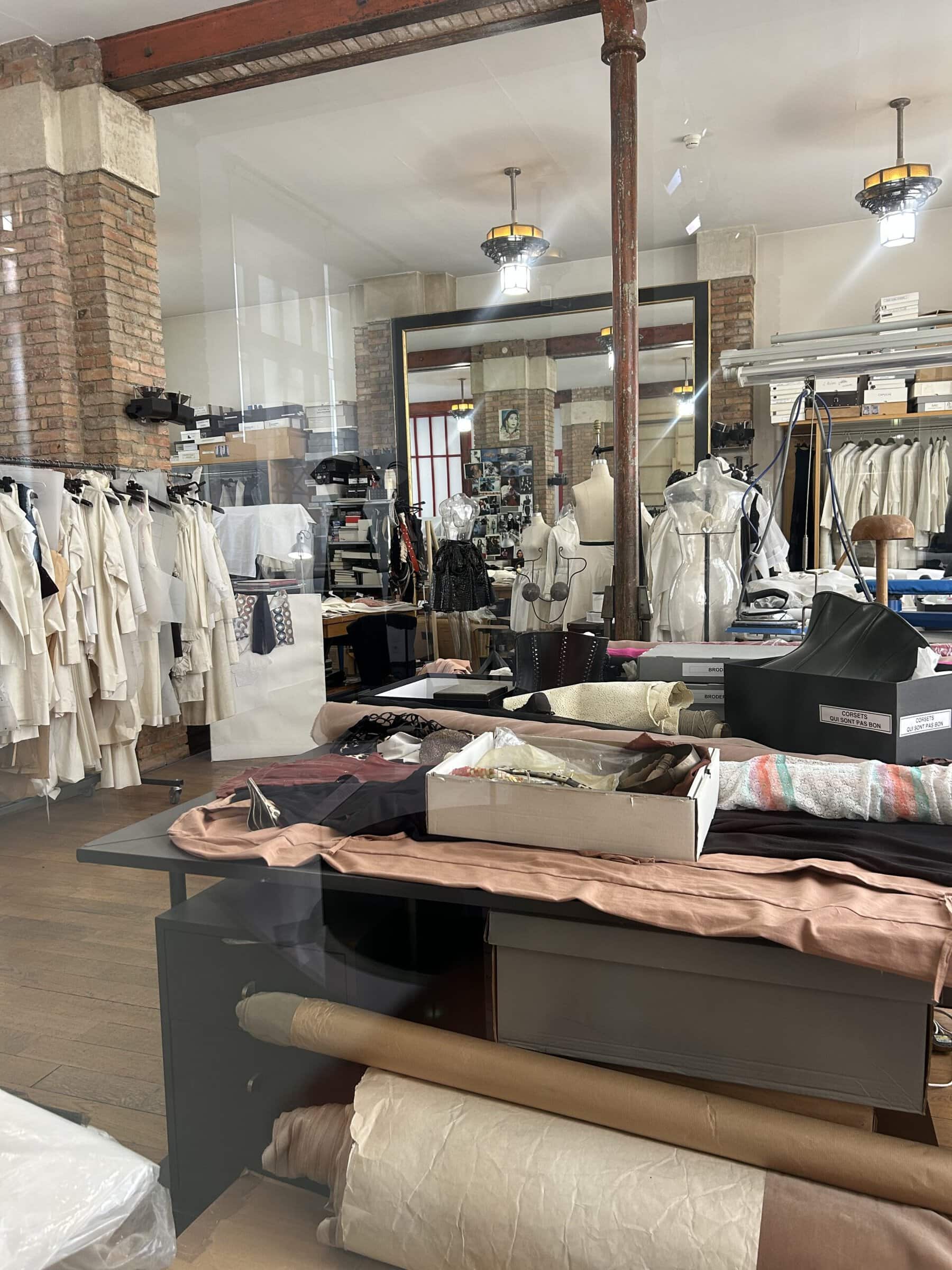
An installation view from Azzedine Alaïa et l’Afrique, held in Azzedine Alaïa’s former studio. The exhibition explores how Africa influenced his designs through materials, forms, and decorative references.
She participated in a beach cleanup at Pointe des Almadies and met environmental activist Modou Fall, known as Homme Plastique, who wears clothing made from discarded plastic to start conversations about consumption and environmental responsibility.
She stood at the Door of No Return on Gorée Island, connecting the history she’d learned in the United States to a wider Atlantic story that links West Africa, the Caribbean, and the Americas.
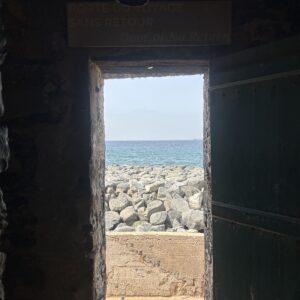
The Door of No Return at the Maison des Esclaves on Gorée Island, Senegal, opens toward the Atlantic Ocean.
And through it all, people took her questions seriously.
“Their generosity made the project possible and reminded me how meaningful it can be when someone takes a young researcher and her questions seriously,” Anjali said.
Designers think like engineers
By the end of the summer, Anjali’s understanding of sustainable fashion had become far more complex than when she started.
“I began asking whether sustainability means creating something that lasts for generations, reducing harm to the environment, supporting local knowledge and labor, or changing the way people consume,” she said. “I realized that no single definition fully captures the work I witnessed.”
She now thinks in terms of “thoughtful and environmentally responsible fashion,” understanding the entire life of a garment and making deliberate choices at every stage: water use, energy consumption, material sourcing, labor conditions, waste management, consumer behavior. Each decision creates ripple effects through an interconnected system.
Sound familiar? It should.
“This project also showed me that designers think much like engineers,” Anjali said. “They work within constraints, solve problems creatively, and consider how their decisions affect both people and the environment.”
For an environmental engineering student, that realization connected everything. Fashion isn’t separate from engineering. It’s another complex system where every choice matters, where resources are limited, and where you have to balance competing priorities while trying to minimize harm and create something valuable.
A series of thoughtful choices
As an applied sciences major, Anjali wants to continue studying how water, energy, materials, and consumer behavior interact within environmental systems. Her summer in Senegal gave her a new framework for thinking about those interactions, not through pipes and treatment plants, but through ateliers and looms and the hands of weavers turning thread into fabric.
“Sustainability is not simply a label,” Anjali said. “It is a series of thoughtful choices about materials, production, people, consumption, and what we choose to value.”
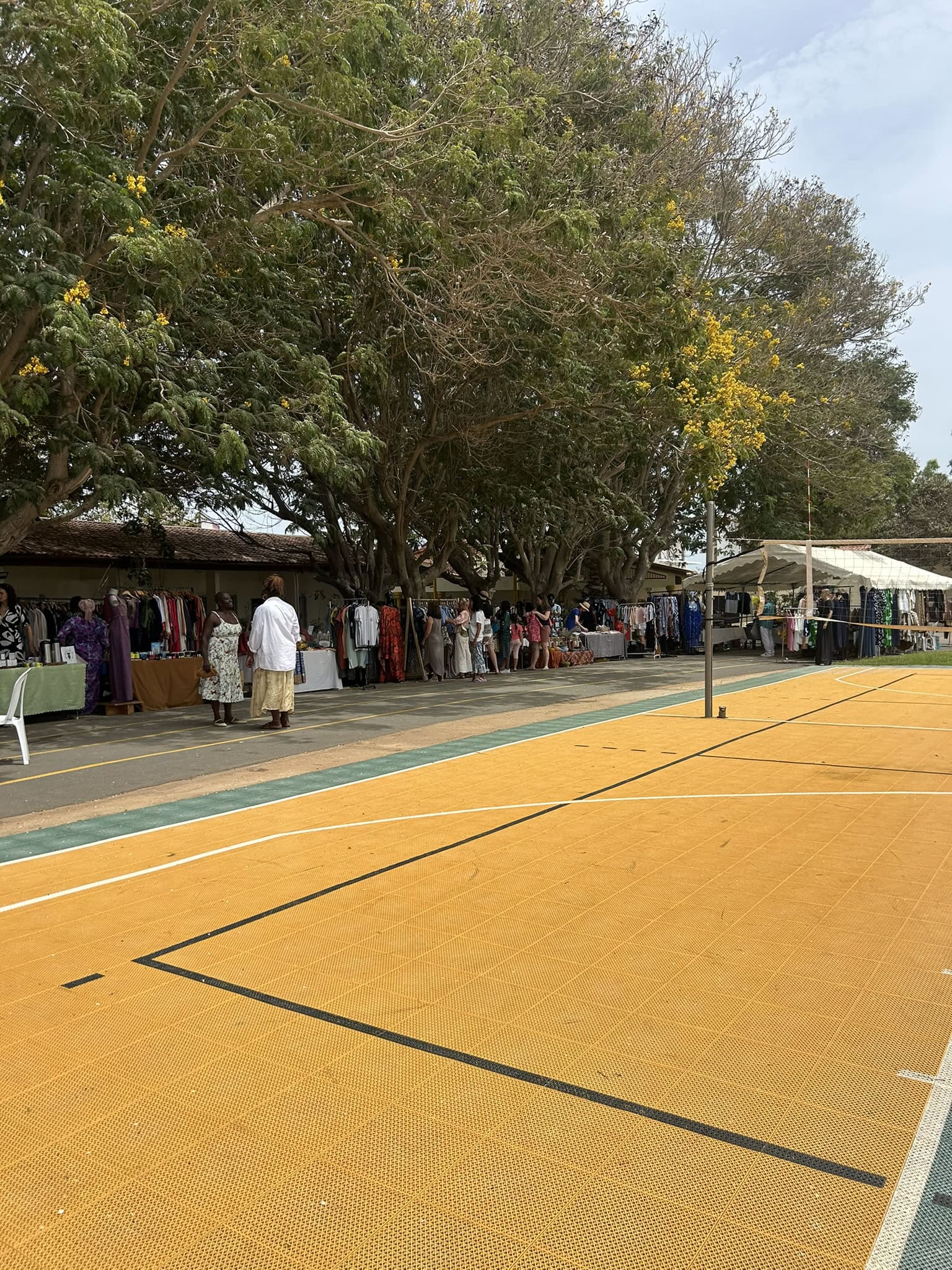
Clothing vendors display garments at an outdoor market in Dakar, Senegal, where Anjali observed how textiles and finished garments are presented to consumers.