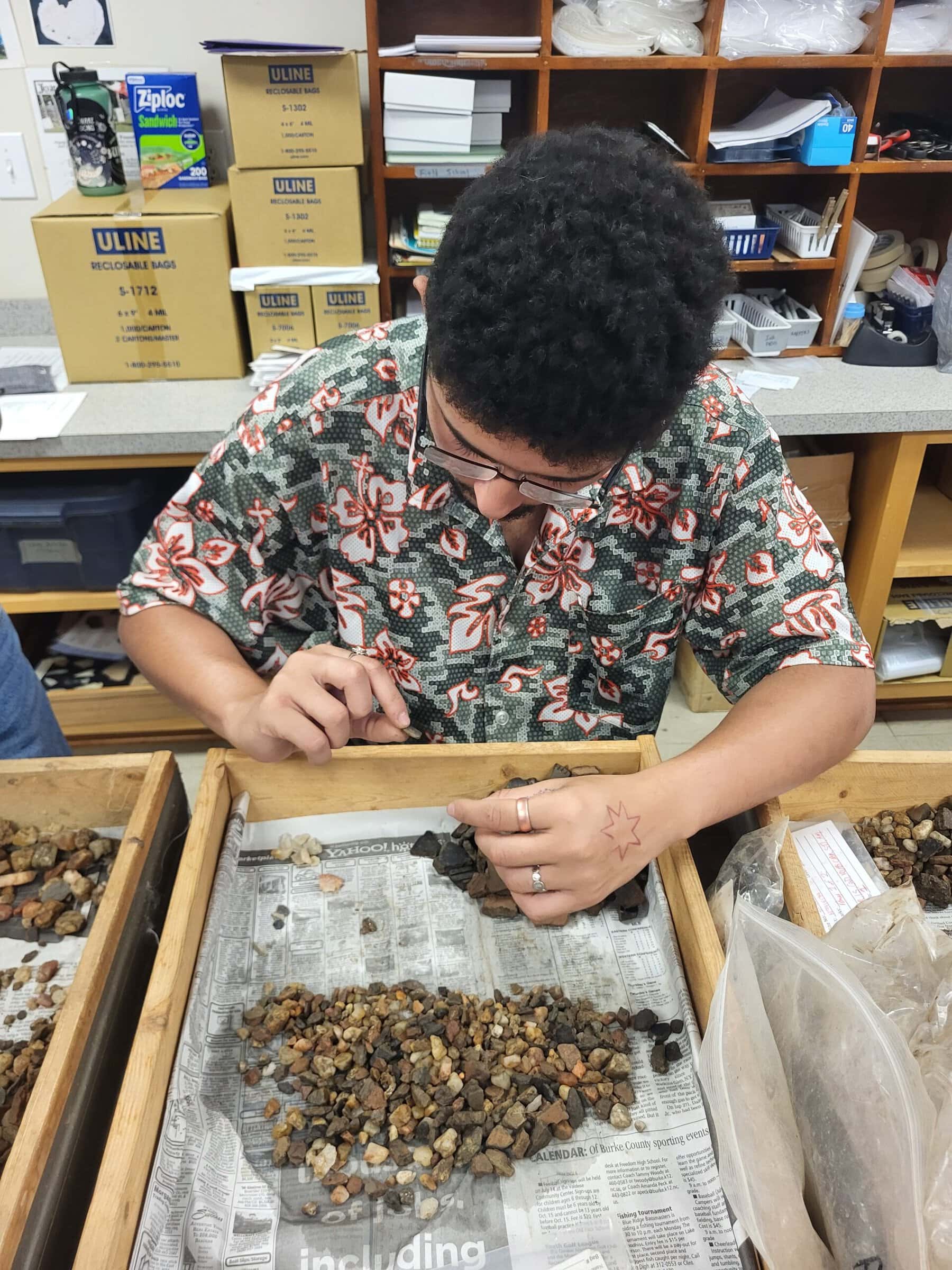
Amadeu Neto ’26 sorts artifacts recovered from the excavation site in Morganton.
Morehead-Cain Global Fellow Amadeu Neto ’26 spent his summer in North Carolina excavating with the Exploring Joara Foundation in Morganton, and came away with a lesson he’ll carry into art and diplomacy.
The day’s fieldwork was done, and everyone was exhausted. So Amadeu Neto ’26 and the other students at the archaeology site in Morganton, North Carolina, decided to jump in the creek next to it.
For half an hour, they floated on the water. It “felt like being kids again for a moment,” Amadeu said.
The moment also showed him what the work was really about: reconnecting with the land, and with “the fact that being human is such a nice experience to share with each other.”
A new kind of fieldwork
Amadeu, a Morehead-Cain Global Fellow from Brazil, isn’t an archaeology major. He studies language and literature at the Federal University of Ceará, is a published poet and playwright, and co-founded a youth education program in Brazil.
Launched in 2025, the Morehead-Cain Global Fellows Program identifies, invests in, and empowers emerging leaders who seek to positively shape communities across the world. Global fellows pursue a fully funded year of undergraduate study and research at Carolina. The program includes funded travel within the United States, personal coaching from Morehead-Cain advisers, and yearlong leadership development.
Before returning home, he spent the summer on independent research with the Exploring Joara Foundation, an archaeology organization in Morganton with ties to Carolina. There he worked with Rachel Briggs, an assistant professor in UNC’s Department of Anthropology.
The foundation’s work is directly connected to preserving Indigenous cultures, something Amadeu has cared about since he started college in Brazil.
Alongside other UNC students, he excavated, found artifacts, learned to tell them apart, and cataloged them. The group also mapped the soil they worked so future students would have the information.
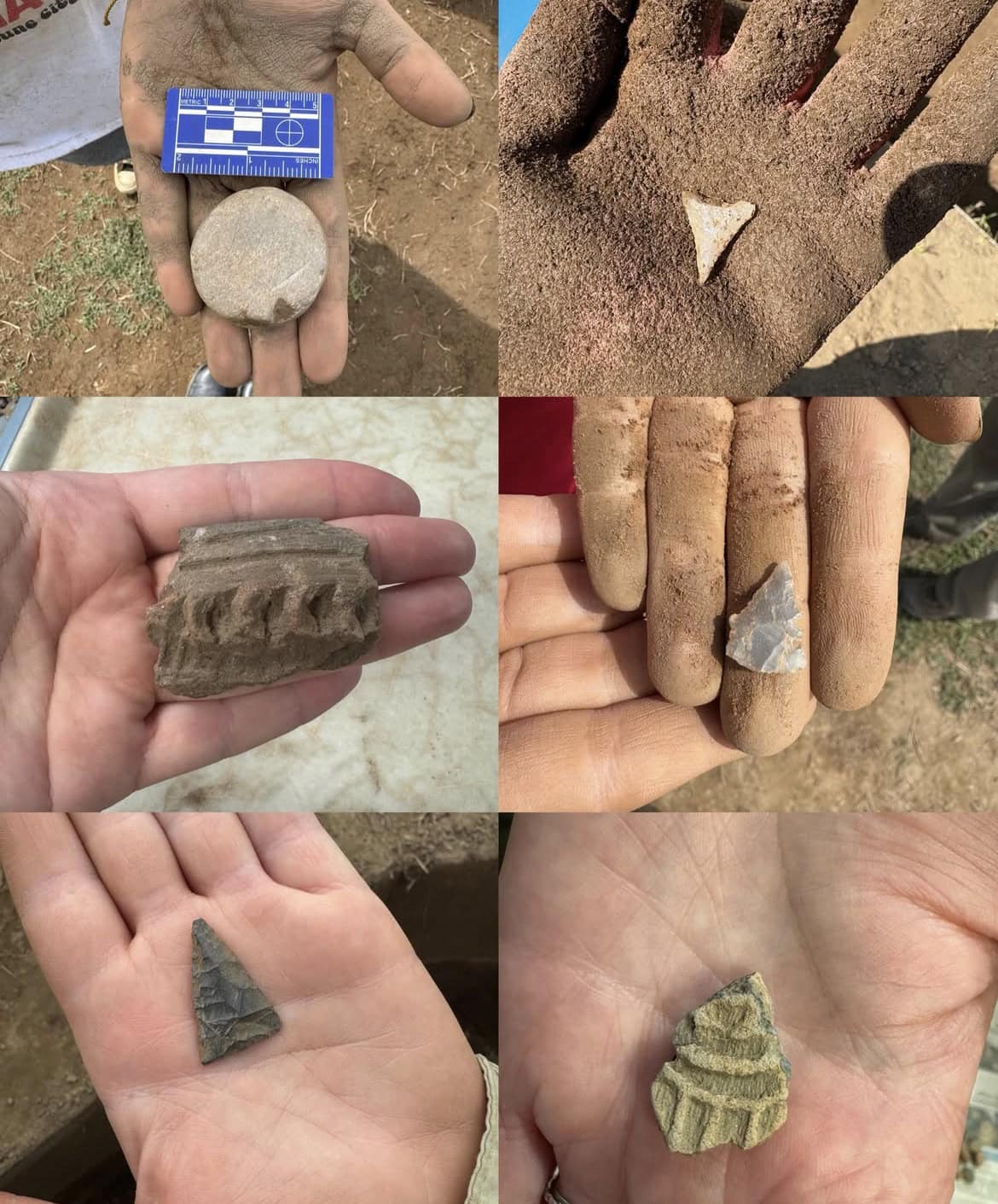
Finds from the excavation, including stone points and decorated pottery fragments.
Choosing discomfort
A year as one of the first global fellows had changed Amadeu “in deep ways,” and he wanted to spend his summer doing something completely different, as a way of opening himself to whatever came next.
“It was a very good surprise to feel lucky while I was doing something I have never done before,” he said.
He could have stuck with work he was used to, which would have been easier.
“However, I don’t think the life I want lives in the easy and comfortable choices,” he said.
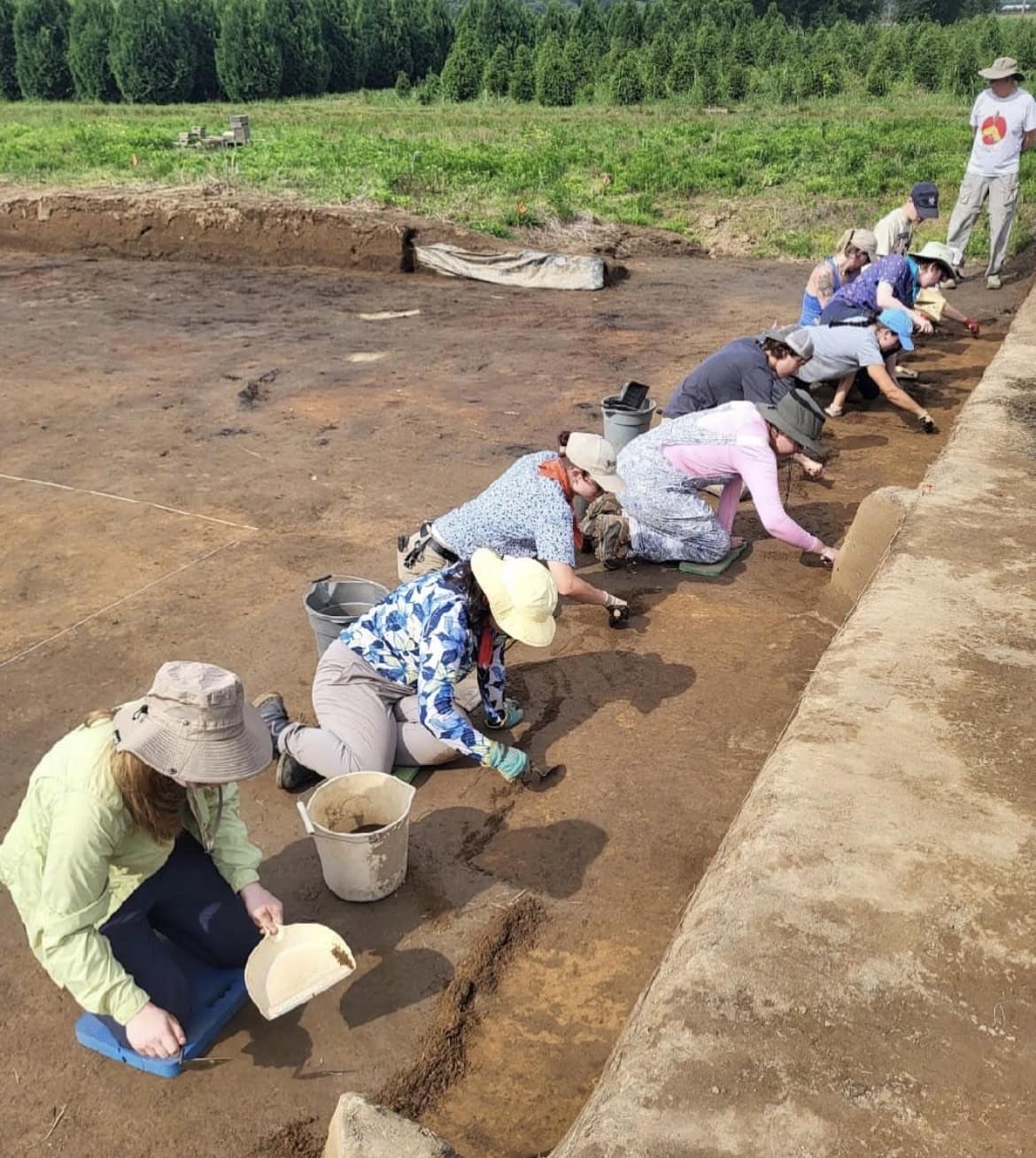
Students and volunteers trowel an excavation unit at the site in Morganton.
The experience from this past summer will inform his work back home, as well as his future pursuits in art and diplomacy, Amadeu said.
“Once I become a Brazilian representative I want to stand up for the importance of preserving the land, the life and culture of those who were here before any of us.”
Stories for Morganton
Amadeu also used his time in Morganton to write. The group wrote a comic book about archaeology for children in the community, co-written and illustrated by UNC students Mayra Capula and Samantha Shell, to help them learn why this kind of work matters for preserving cultures.
He also began what may become his first novel, a reflection on his year at Carolina.
“One thing that has been with me and this experience reassured me of is that sometimes in order to move forward you have to look backwards,” Amadeu said. “To learn from the past is necessary in our personal journeys but also in our path as a society.”
Hear more global fellows reflect on their year at Carolina.